
By Matilda, StylesNexus 12 years dressing real bodies for real days, currently three pairs deep into a ballet flat habit I did not see coming.
My mom wore plain black ballet flats to church every Sunday for as long as I can remember. Growing up, that meant one thing to me: boring. Safe. A shoe for people who had stopped trying.
Then last spring I packed the wrong shoes for a work trip. My feet were still wrecked from a wedding two days earlier, so I grabbed an old pair of black flats out of desperation rather than style. I wore them through an airport, a client dinner, and a full day of walking, and I got more compliments on that outfit than I had in months of wearing heels.
That trip changed how I shop. I now own five pairs across three brands, I have ruined exactly one pair in the rain, and I have spent more Sunday afternoons than I’d like to admit figuring out what actually works with them. Everything below is what I wish someone had handed me before I started.
Why Ballet Flats Are Having a Real Moment in 2026, Not Just a Marketing Moment?
Fashion editors have been saying flats are “back” for a few years running, so it’s fair to be skeptical of another trend piece claiming the same thing. Here’s what’s actually different this time.
WhoWhatWear’s spring 2026 coverage points to satin ballet flats becoming a genuine alternative to heels for event season, prized for looking polished without the discomfort a heel adds. Their color trend reporting also flags butter yellow as one of the season’s defining shades, alongside deep plums, sky blues, and beachy greens replacing the classic black-only approach. Refinery29’s spring 2026 shoe coverage separately highlighted V-cut and angular-toe flats gaining traction after both Chanel and Stella McCartney featured sharper, more architectural takes on the silhouette in recent collections.
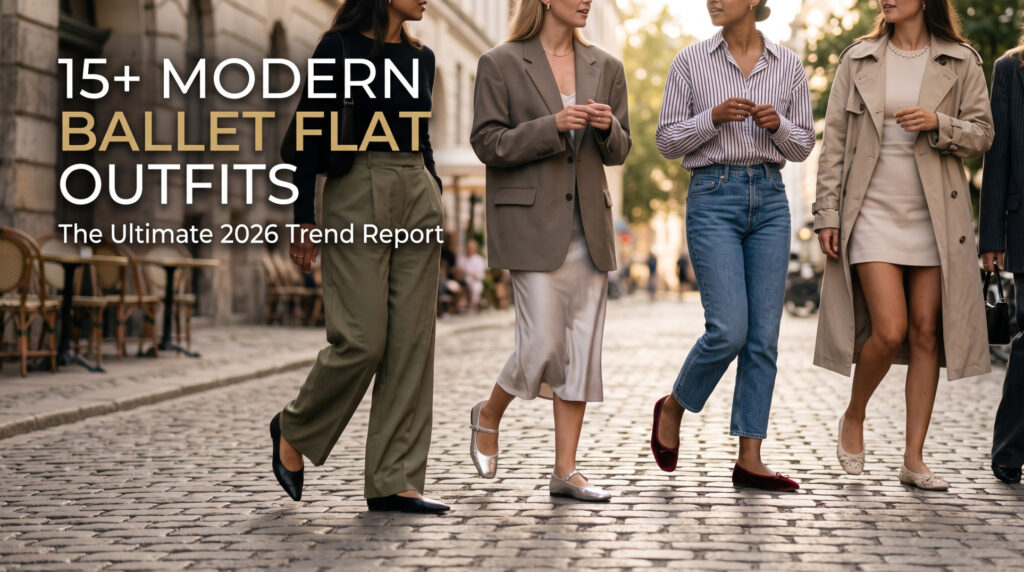
So it’s not just that flats are comfortable, which they’ve always been. It’s that the shoe itself has genuinely evolved: pointed toes, mesh panels, split toes, cap toes, and color choices that would have looked out of place five years ago.
Black or Brown First? My Honest Answer
- Every reader asks this, and the honest answer is that it depends on your closet, not on some universal styling law.
- I started with black because my wardrobe leans denim, gray, and white. Black flats disappeared into almost everything I already owned within the first week.
- My sister went brown first, because her closet is all warm tones: cream sweaters, camel coats, olive jackets. Brown made more sense for her than black ever would have.
Quick test: open your closet right now and count black pieces against brown or warm-neutral pieces you actually wear weekly. Buy the shoe color that matches the bigger pile, then add the second color once you know you’ll actually wear the shoe regularly.
What I Got Wrong on Sizing (So You Don’t Have To)?
I ordered my first pair online in my usual size, assuming flats fit the same way sneakers do. They didn’t. Leather ballet flats run narrower through the toe box than most casual shoes, and mine pinched by hour three.
According to a comparison review from The Mom Edit, which tested more than 30 pairs of mesh and woven flats, shape matters as much as size. The Sam Edelman Shira has a rounder, roomier toe box that suits wider feet, and Margaux flats are also available in wide widths. Marc Fisher’s Evonna, by contrast, runs notably narrow.
If you’re buying online:
- Check the return window before you order, not after
- Size up half a size for stiff leather or suede that won’t stretch
- Mesh and woven styles tend to be more forgiving since they have natural give
- If you know you have a wider foot, look specifically at brands that publish wide-width options rather than guessing
What Wide Feet or Low Arches Actually Need?
This is the part most ballet flat guides skip entirely, and it’s exactly why I’m including it.
Ballet flats are, by design, low on cushioning. That’s part of what makes them elegant, but it’s also why they can be rough on anyone with flat feet, plantar fasciitis, or a wider foot shape.
A recent buyer’s comparison from Gorgeautiful found that Dr. Scholl’s Giorgie has some of the best built-in arch support in the category thanks to an OrthoLite insole, and it’s priced around $60. On the higher end, Margaux’s The Demi and Nisolo’s Ava both include cushioned insoles with moderate arch support, while fashion-forward options like the Everlane Day Glove or Tory Burch Minnie offer very little cushioning and are better suited to shorter wear, not all-day walking.
Practical takeaway: if you’re on your feet all day, buy the flat with the insole built for that, not the flat that photographs best. Save the delicate leather pair for dinners and shorter outings.
Real Brands Worth Knowing, by Budget:

I get asked constantly where to actually buy these, so here’s a straightforward breakdown by price tier, based on both my own pairs and current buyer reviews.
Budget (under $70): Dr. Scholl’s Giorgie is the strongest pick here specifically for arch support at a low price point.
Mid-range ($100 to $170): Sam Edelman’s Felicia is one of the most consistently well-reviewed flats in this range, with a padded footbed and an elastic topline that adapts to your foot without a break-in period. Rothy’s sit at a similar price point and are machine washable, which matters if you plan to wear them constantly the way I do.
Investment ($175 and up): Margaux’s The Demi comes up repeatedly in editor roundups for its extended size and width range, which matters if standard sizing has never quite fit you. Tieks are the better pick specifically if you travel a lot, since they fold flat and pack easily, though Rothy’s edge them out for everyday durability according to recent side-by-side comparisons.
None of these brands paid for this mention. They’re simply the ones that came up repeatedly across my own research and other testers’ hands-on reviews.
15+ Outfit Combinations That Actually Work:
I’ve worn a version of most of these myself over the past several months, for work, errands, or nights out. A few came from friends whose closets I frankly raided for inspiration.
1. Oversized Sweater, White Jeans, Brown Flats:
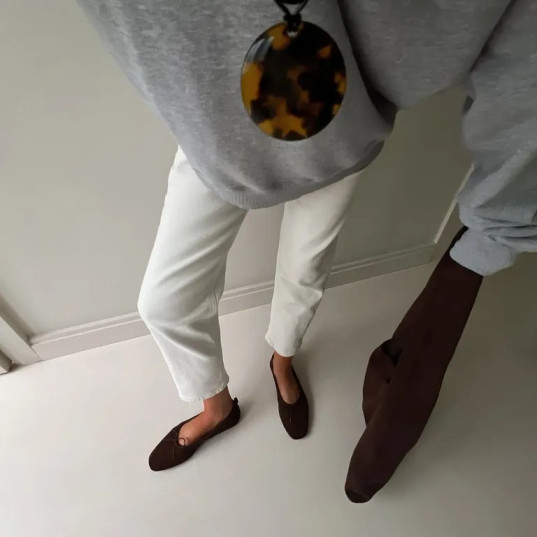
This became my default outfit once the weather cooled but wasn’t quite cold enough for boots. A slouchy cream or gray sweater, crisp white jeans, and brown flats look effortless without looking unfinished. A long pendant necklace keeps the sweater from swallowing your frame whole.
2. Leather Jacket, White Tee, Gingham Mini Skirt:

I wore a version of this to a friend’s birthday dinner: black flats, a plain white tee tucked into a gingham mini skirt, leather jacket on top. The leather keeps the skirt from reading as too sweet. Keep the bag small and the jewelry minimal, since the outfit already has three strong elements competing for attention.
3. Brown Blazer, Leather Mini Skirt, Brown Flats:

An oversized brown blazer over a leather mini skirt, tied together with brown flats, reads far more expensive than it costs to put together. I wore this to a work dinner and felt sharper in it than I do in an actual suit.
4. Gray Sweater, Leather Jacket, Midi Skirt:
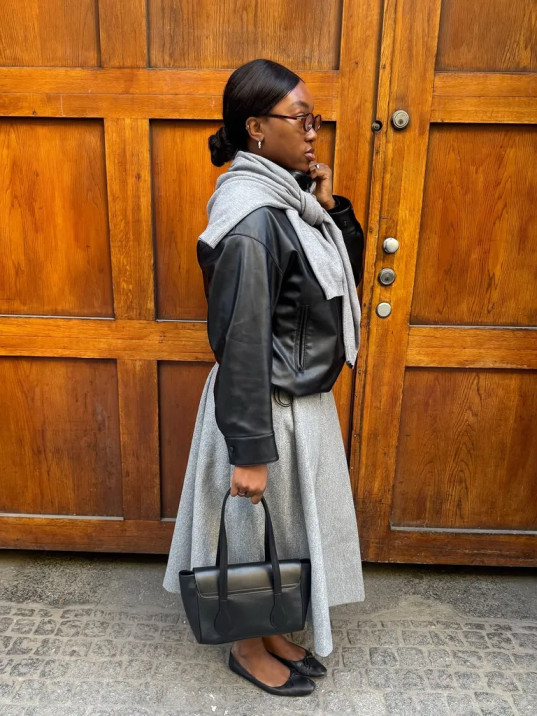
For the in-between weeks when it’s not quite jacket season but you’re cold anyway, black flats echo the jacket’s tone and stop the whole look from feeling too soft.
5. Leopard Cardigan, Lace Cami, Brown Trousers:
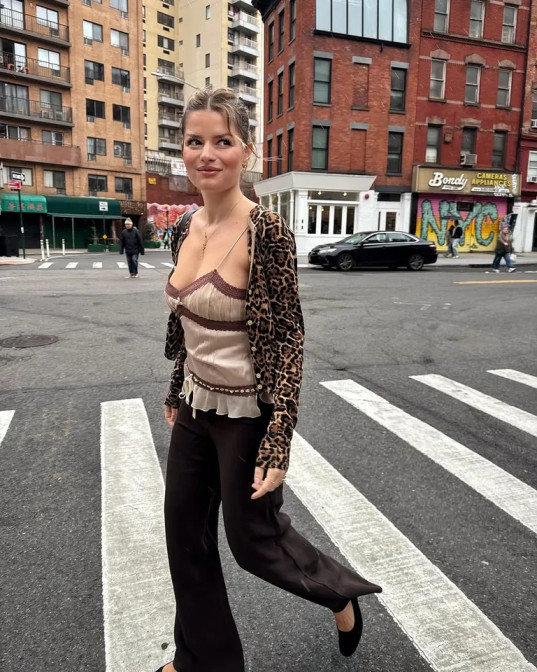
Animal print doesn’t need to dominate. A leopard cardigan over a lace cami, paired with brown trousers, already has enough going on texturally, so keep the flats plain black and let them ground the outfit rather than compete with it.
6. Suede Jacket, Bodysuit, Black Trousers:
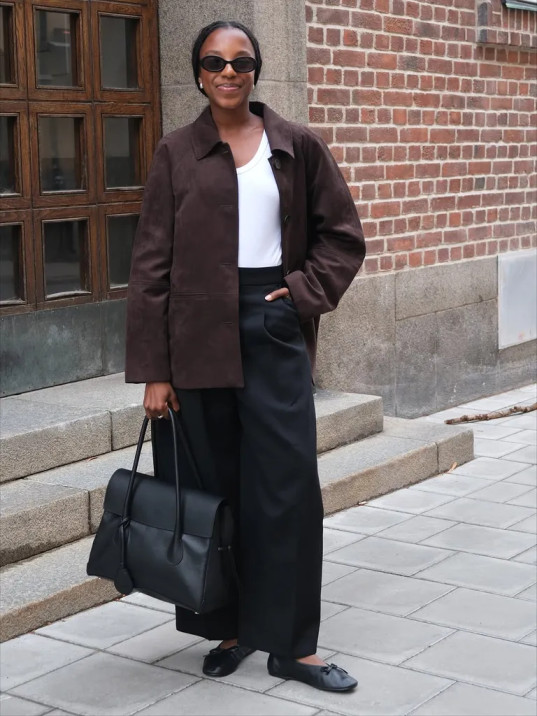
A bodysuit keeps the silhouette clean under a bulkier jacket, and black flats finish the streamlined look. This became my default for client meetings once I got tired of blazers.
7. Matching Maroon Set With Black Flats:
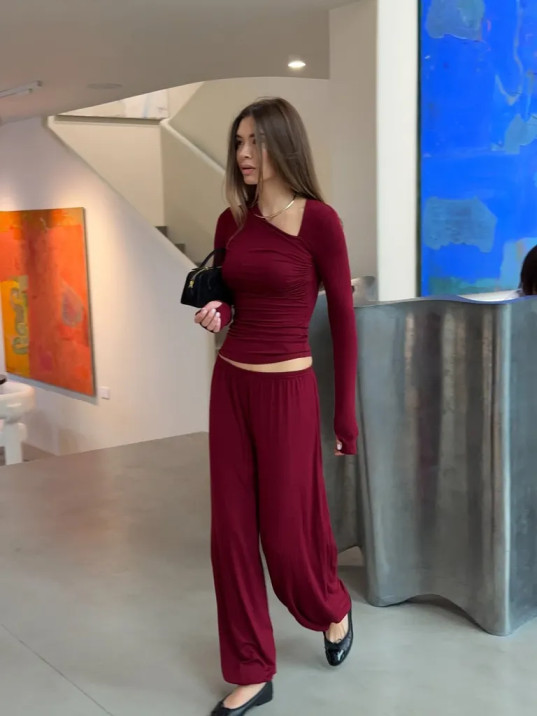
On days with zero energy for outfit planning, a matching maroon knit set with black flats and a thin gold necklace takes under two minutes and still looks intentional.
8. Bandana, Chunky Knit, Silk Pants, Brown Flats:
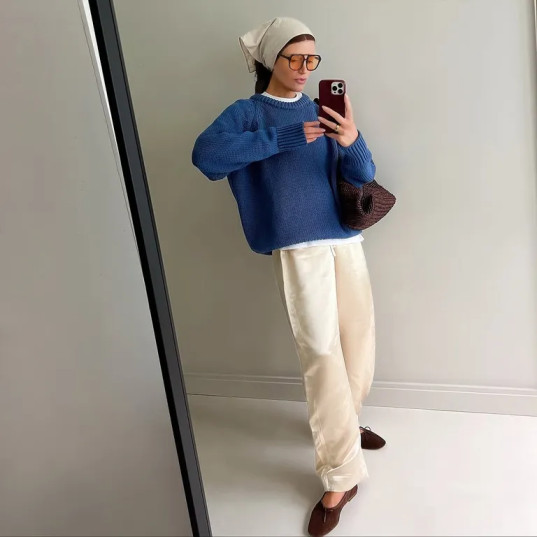
I was skeptical of silk pants under a chunky sweater until I tried it. The contrast in weight is what makes it interesting. Keep the palette in one warm family so the mix of textures doesn’t tip into visual noise, and let a bandana add the playful, slightly vintage finishing note.
9. Silk Top, Vintage Jeans, Two-Tone Flats:

If you own a black-and-brown two-tone pair, this is where they earn their keep. A silky top over relaxed vintage-cut jeans, tied together by flats that are already two neutrals in one shoe, works with almost anything else in your closet too.
10. Capri Pants, Mesh Flats:
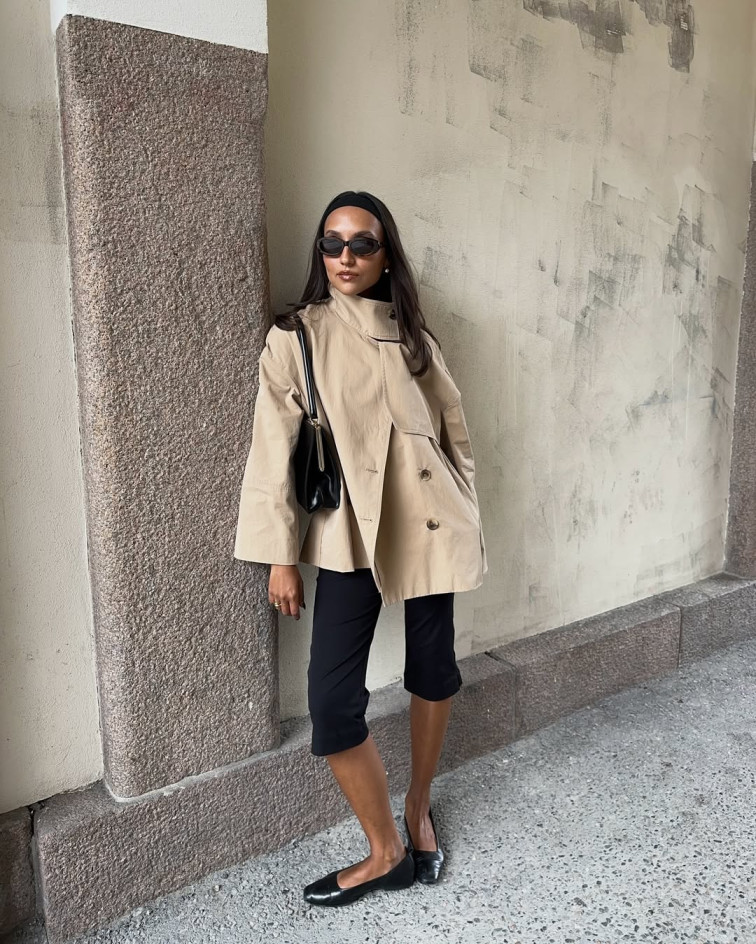
Capris are back in circulation, and mesh flats are their natural partner, showing a bit of ankle without looking bare. Pair with a simple tank or an oversized button-down for balance.
11. White Tee, Satin Flats, Slip Skirt:
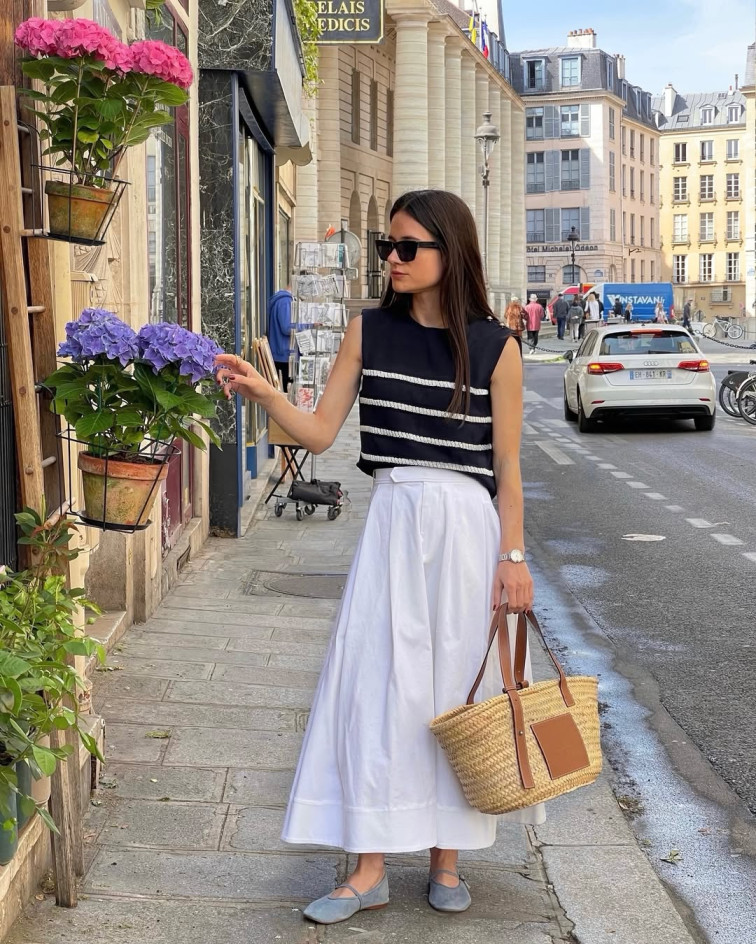
Cotton against satin creates a quiet contrast that photographs well and wears easily. Black, champagne, or nude flats all work depending on the skirt’s shade. This is my pick for a casual dinner that might turn into drinks after.
12. Tank Top, Satin Midi Skirt, Flats:

Simple on top, elegant on the bottom, and far easier to walk a full evening in than heels. A cream tank with a champagne skirt and nude flats creates a soft, tonal effect that’s harder to get wrong than it sounds.
13. Linen Trousers, Mesh Flats:

Wide-leg linen trousers and mesh flats have become my entire summer uniform. Breathable, comfortable, and still reads as an outfit rather than loungewear.
14. Butter Yellow Flats, White Linen Set:

I was nervous about buying colored flats, but butter yellow against an all-white linen set is one of my favorite pairings this year, and it lines up with what trend forecasters have flagged as one of the season’s defining colors. Let the shoes carry the color and keep everything else minimal.
15. Pointed-Toe Flats, Wide-Leg Jeans:

Wide-leg jeans can look heavy on the bottom, especially on a shorter frame. Pointed-toe flats create a longer line that balances the volume. Add a blazer for a dressier office-appropriate version.
Five More Worth Building Into Rotation:
16. Straight-leg jeans, fitted cardigan, black flats: This is the outfit I reach for when I genuinely have not thought about getting dressed. Straight-leg denim keeps the proportions clean, a fitted cardigan adds structure up top, and black flats finish it without adding any visual weight. It’s a fifteen-second outfit that still looks considered.
17. Tailored trousers, oversized button-down, brown flats: Roll the sleeves, half-tuck the shirt, and let brown flats soften what would otherwise read as strictly office-formal. This works particularly well for a workplace that’s professional but not suit-and-tie strict, and it transitions to dinner with zero changes needed.
18. Mini dress, leather jacket, ballet flats: Swapping heels for flats under a mini dress instantly makes an outfit feel wearable rather than performative. I did this for a friend’s engagement party and was still comfortable four hours in, which would not have been true in heels.
19. Pleated skirt, crew-neck sweater, Mary Jane flats: The closest thing on this list to a classic schoolgirl silhouette, but the strap across the foot on a Mary Jane style keeps it from tipping into costume territory. Knee socks or bare ankles both work depending on the season.
20. Dark denim, white button-down, red flats: If you’re ready to move past neutrals, red is the easiest color to introduce this way. Keep literally everything else simple, dark denim and a crisp white shirt, and let the shoes be the only loud decision in the outfit.
Caring for Ballet Flats So They Actually Last:
This is the section I learned the hard way, and it’s the one most guides skip in a single throwaway line.
- Weather is the real enemy, not wear:
A light drizzle turned a pair of suede flats into a soggy mess I could not fully recover, even with a suede brush and a full day of drying. If rain is even a possibility, wear a pair you don’t mind risking, or carry a small waterproof spray and treat suede before the first wear.
- Rotate pairs instead of wearing one on repeat:
Letting a pair fully dry out and reshape between wears extends their life significantly. I learned this after flattening the toe box on my first pair within six weeks of daily wear.
- Keep a small care kit on hand:
A suede brush, a leather conditioning wipe, and a fabric protectant spray live in my closet now. Five minutes of maintenance after a scuffed evening saves the shoe.
- Store them with shape, not flat in a pile:
Shoe trees or even lightly stuffing them with tissue paper when not in use prevents the toe box from collapsing over time, which is the single fastest way a good pair starts looking cheap.
- Machine-washable styles are worth the tradeoff for daily wear:
If you plan to wear a pair constantly, a washable style like Rothy’s saves real money over time compared to replacing a leather pair that scuffs and creases within a season.
How to Make Any Pair of Flats Look Expensive?
You don’t need the $300 pair for this to work. Some of my most-complimented outfits involved flats under $60.
Get the fit right first: Well-fitted trousers or a skirt that sits correctly at the waist matters more than the shoe’s price tag. I learned this after wearing baggy pants that undercut an otherwise good outfit.
Cap the palette at two or three colors: Every time I’ve added a fourth color out of indecision, the outfit looked messier, not more interesting.
One structured bag does more work than people expect: It’s the single easiest way to make a casual outfit read as intentional.
Clean shoes matter more than expensive shoes: A scuffed pair undercuts even a well-put-together outfit faster than almost anything else. This is the fastest fix on this entire list and the one people skip most.
Mistakes to Avoid:
Wearing delicate pairs in unpredictable weather: Save suede and light-colored leather for dry days specifically.
Buying only one color and assuming it covers everything: Black and brown genuinely serve different wardrobes. If your closet spans both, your shoes probably should too.
Letting wide-leg trousers fully cover the shoe: If none of the flat is visible, the styling choice is essentially wasted. Make sure at least the toe shows.
Skipping an insole entirely: A basic gel insole from any pharmacy noticeably changes how a flat feels after hour four of wear.
Over-matching every single piece to the same exact shade: A slight contrast between the shoes and the rest of the outfit reads as more intentional than a monochrome match.
Quick Answers to What People Actually Ask Me?
What should I wear with ballet flats if I’m petite?
Pointed-toe styles elongate the leg line more effectively than round-toe versions, and cropped or ankle-length bottoms show more of the shoe.
Are they appropriate for the office?
Yes, in most workplaces that aren’t strictly formal. Tailored trousers, a structured skirt, or a blazer keep the look professional.
Can I walk a full day in them?
With the right insole and a comfort-focused brand lke Rothy’s or a Giorgie-style built-in arch support, yes. A thin fashion-first leather flat is better suited to shorter wear.
Do they work in summer?
This is when I wear them most. Mesh and lightweight leather breathe well and pair naturally with linen, skirts, and cropped trousers.
Final Thoughts:
I expected this to be a short-lived trend when I first picked flats back up last spring. Months later, they’re the shoe I reach for more than anything else in my closet, including sneakers that cost twice as much.
Start with one solid pair in whichever neutral actually matches your closet. Get the fit right, don’t skip an insole if you’re walking any real distance, and don’t be afraid to dress them up with silk or satin even on an ordinary weekday. Once the basics feel automatic, that’s when the color and texture experiments actually start paying off.
If you try any of these combinations, I’d love to hear which one becomes your go-to. Mine keeps changing by season, but right now it’s the linen trousers and mesh flats, worn probably more often than is reasonable.