

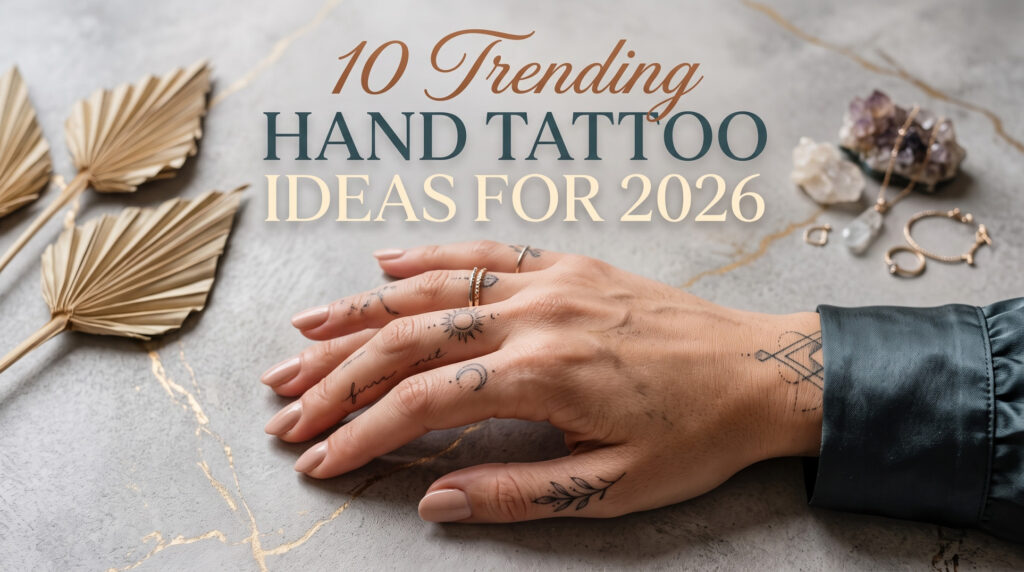
I remember sitting in the chair at a shop in Fishtown back in the spring of 2023, staring at my own hand and wondering if I was about to make the worst decision of my life. Everyone told me the same three things before that first session: it’ll hurt more than anything you’ve felt, you’ll regret it within a year, and no employer will ever look at you the same way again.
Two of those turned out to be wrong.
Since then I’ve added two more hand tattoos, sat through more research than I’d like to admit, and talked to enough artists to notice how much the whole scene has shifted. What people wanted in 2021 barely resembles what’s showing up on appointment books now. The thick tribal blackwork, the “fill the whole hand in one sitting” mindset, it’s quietly fading into the background. What’s replacing it is smaller, more deliberate, and honestly a lot easier to live with day to day.
If you’re where I was a few years back, scrolling Pinterest at 1am trying to figure out what won’t look dated in five years, here’s the list I wish someone had handed me.
Why Hand Tattoos Are Having a Moment Again?
A few years ago, a hand tattoo was treated like the final boss of getting inked. You worked your way up from a forearm piece or an ankle tattoo before you touched your hands. That gatekeeping has mostly disappeared.
Part of it is technique. Fine-line work has gotten precise enough that artists can do things on hands that would’ve turned into a blurry mess a decade ago. Part of it is culture, since musicians, service industry workers, and even people in fairly conservative office jobs are showing up with visible hand work and nobody blinks. And part of it, if I’m being straight with you, is just Pinterest and Instagram. I found my own artist through a reel of her healed fine-line work, not by walking into a shop off the street.
The shift I keep noticing: nobody wants their hand to look “covered” anymore. They want it to look like the ink was always meant to sit exactly where it does.
What I’d Tell You Before You Book Anything?
Your tattoo will fade faster than you expect:
Hands are in the sun constantly, get washed a dozen times a day, and the skin there just doesn’t hold ink the way your arm or thigh does. My first piece needed a touch-up at the eight-month mark, which caught me off guard since nobody had mentioned a timeline that short.
Skin tone changes how a design will actually look:
This one gets left out of most articles I’ve read on this topic, and it shouldn’t be. Fine-line work and heavy negative-space designs, like the celestial dotwork or the ornamental henna style further down this list, read very differently on deeper skin tones than they do in the reference photos most shops show you. A good artist will adjust line weight and contrast accordingly. If yours can’t show you healed examples on skin closer to your own tone, that’s worth asking about directly before you commit.
Not every artist should be touching your hands:
A friend of mine picked a generic street shop for a knuckle tattoo, and the lines blew out within a year because the artist didn’t account for how differently knuckle skin stretches and moves compared to skin anywhere else. Look for a healed-work portfolio that specifically shows hands, not just forearms and calves.
Placement changes everything:
Moving a design half an inch can be the difference between something that looks like it belongs there and something that looks stuck on. Fingers, knuckles, thumb webbing, wrist, the back of the hand, they all age and move differently, so talk placement through in detail during your consult, not the day of. With that out of the way, here’s what’s actually trending.
1. Cyber Sigilism & Y2K Abstract:
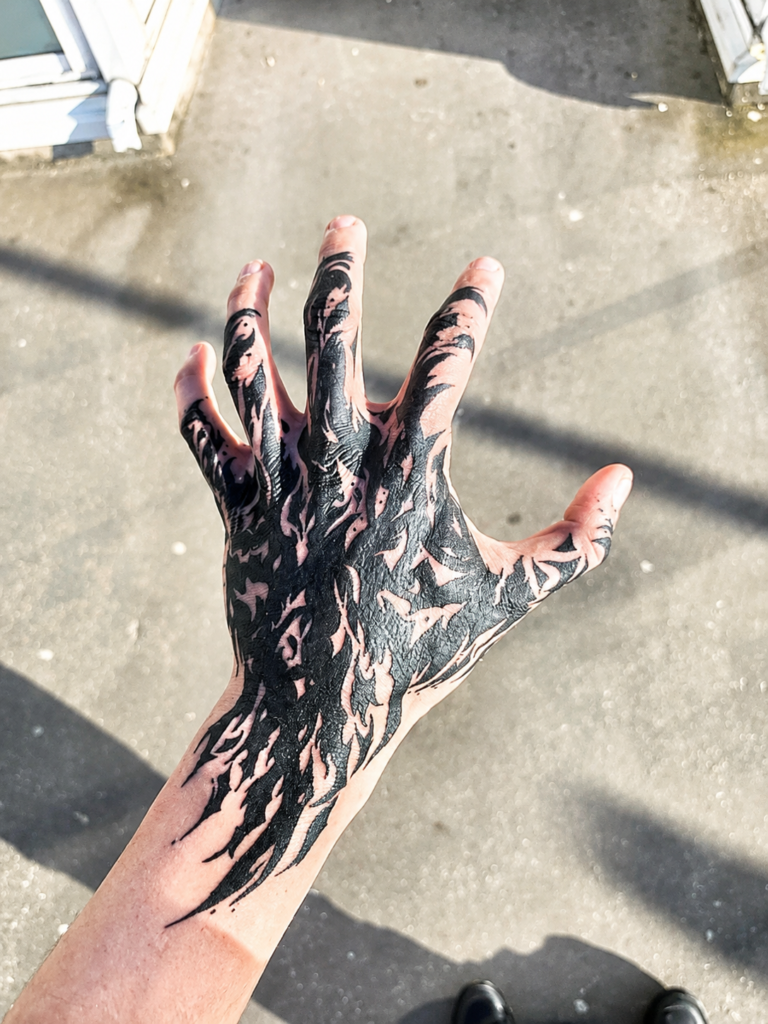
I first saw this in person on a bartender in Brooklyn and genuinely mistook it for metallic jewelry before realizing it was ink. It has this liquid-chrome quality, like mercury poured across the back of a hand and left to settle into sharp points and curved lines. It’s ridden the whole Y2K fashion revival, which tracks, since both lean on that early-2000s tech aesthetic filtered through something edgier.
It looks strongest across the back of the hand, wrapping the middle finger, or trailing down toward the wrist. If your closet already leans gothic or cyberpunk, this fits right in.
My artist told me something during the consult that stuck with me: don’t bring in a printed design and ask for it copied exactly. The strong Cyber Sigilism pieces are drawn freehand in the room and adjusted to your actual hand shape. The copy-paste versions almost always end up looking stiff once they’re on skin instead of paper.
2. Ornamental Henna Flow:
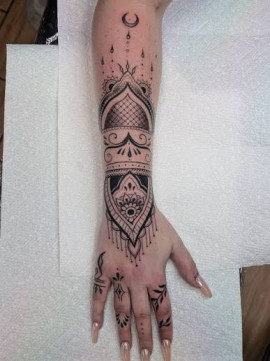
This one surprised me, because I didn’t expect to like it as much as I did. It borrows from mehndi and mandala work, but instead of the dense, all-over coverage you’d see with actual henna, artists are spacing it out into much lighter linework. The end result looks close to permanent lace gloves. A coorker of mine has this running from her wrist across two fingers, and people stop her fairly often assuming it’s jewelry.
Thumb webbing, the wrist, and individual fingers all suit it well.
Symmetry is the whole game here. If the artist’s freehand skills aren’t sharp, uneven spacing becomes obvious fast, especially once it’s healed and softened slightly.
3. Botanical Vine & Leaf Wrap:

This is the one I ended up getting myself, a thin ivy vine starting at my wrist and trailing along the side of my hand toward my index finger. Three years in, it’s still my favorite piece, mostly because botanical work doesn’t really go “out of style” the way trend-driven pieces sometimes do.
Vines and stems already carry that curved, organic movement, so they follow the natural lines of your fingers and knuckles instead of fighting against them. Olive branches, ivy, tiny wildflowers, eucalyptus, and laurel vines are the picks I see most often.
If you want the delicate, hand-drawn illustration look rather than something bolder, ask specifically for single-needle work. That’s the detail that made the difference for mine.
4. Micro-Constellation & Celestial Dappling:
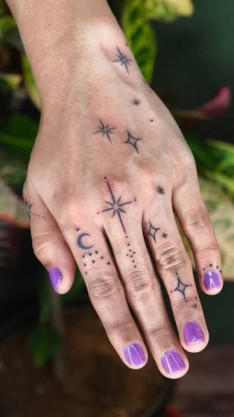
A friend went through a breakup a couple years back and ended up with tiny scattered stars and a crescent moon across her knuckles as a kind of “starting over” piece. What struck me was how understated it looked in person, more like freckles made of ink than one obvious moon-and-stars tattoo, even though every dot was placed deliberately.
Knuckles, fingers, and the back of the hand all work. Artists lean on heavy negative space and micro-dot shading instead of solid black stars, which keeps it feeling light instead of cluttered.
5. Fine Line Anatomical Heart or Hands:
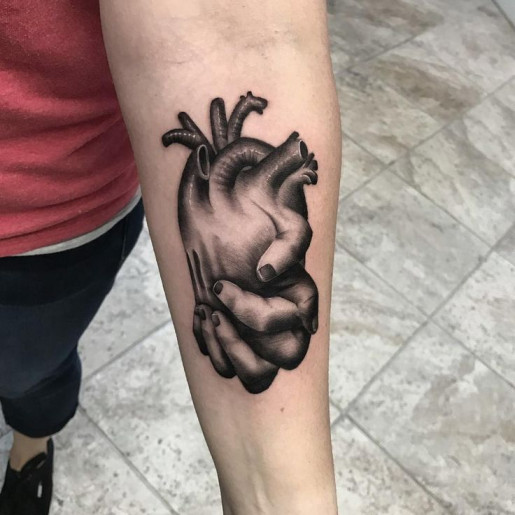
This carries a completely different wight than a cartoon heart tattoo. You’re looking at realistic anatomical hearts, or sometimes two hands reaching toward each other, drawn like a sketch pulled from an art student’s notebook. I looked into this style for a memorial piece a while back and ended up going a different direction, but I still think about how moving some of the reference photos were.
It suits the back of the hand, the wrist, and the thumb area particularly well. Ask for single-needle shading over solid fill if you want it to keep that delicate, sketched quality instead of reading as heavy.
6. Micro Gothic Font Knuckle Script:
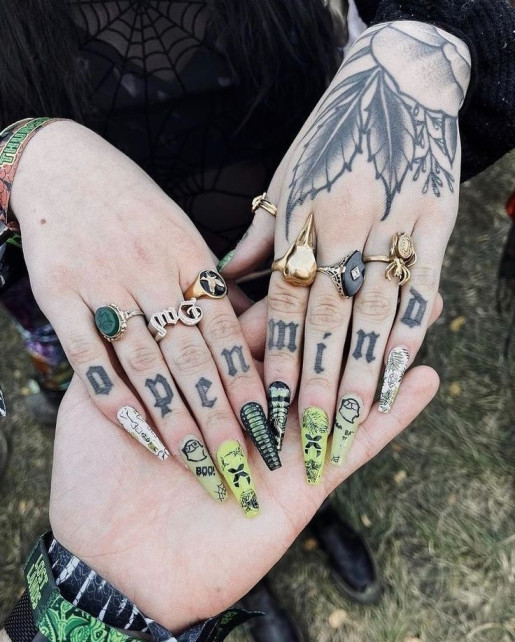
Knuckle tattoos have always carried a rebellious streak, but the thick block-letter “LOVE / HATE” style from old films isn’t really what’s getting booked anymore. Now it’s ultra-fine Old English or Gothic script, small enough to feel intentional instead of shouted. Someone I know has “STAY” across his lower knuckles in this style, and it’s one of the cleanest lettering pieces I’ve seen done.
Hope, free, rise, soul, faith, and breathe are the words that come up most, along with initials or Roman numerals for dates.
Here’s where I’ll disagree with a lot of the advice floating around: I think micro-script on knuckles is oversold as a “safe first tattoo.” Ink spreads slightly over years, and tiny lettering is one of the fastest styles to blur into an unreadable smudge. If you want lettering that lasts, size it a notch bigger than your first instinct, even if it feels less minimal in the chair.
7. Fluid Serpent (Wrap-Around Snake):

Snake tattoos are about as classic as it gets, but the hand version feels nothing like the big traditional snake pieces you’d see on a forearm. This one is fine-line, wrapping around a finger before flowing across the back of the hand toward the wrist, almost like it’s mid-movement. I watched an artist sketch this freehand on a client at a convention in Philadelphia, and the way she adjusted the curve of the snake’s body to match the exact bend of the person’s finger was worth stopping to watch.
Snakes traditionally symbolize transformation and renewal, since they shed their skin. It wraps well around the middle or index finger. The design needs to read as one continuous flowing line. Snakes broken into disconnected sections lose the sense of movement that makes this style work.
8. Symmetrical Sacred Geometry:

Probably the most technically demanding style on this list. Clean radiating lines, dotwork, repeating geometric shapes built outward from the center of the hand, things lke lotus patterns, unalomes, mandalas, or hexagon clusters.
I’ve seen this go wrong more than any other style here, because even the tiniest asymmetry becomes obvious once it settles into the skin. A friend’s first attempt at a mandala piece had to be reworked after healing because one side sat noticeably higher than the other. If you’re considering this, ask specifically for portfolio pieces showing symmetrical geometric work, since it’s a different skill set than fine-line botanicals or lettering.
9. Dark-Mode X-Ray Skeleton Hand:
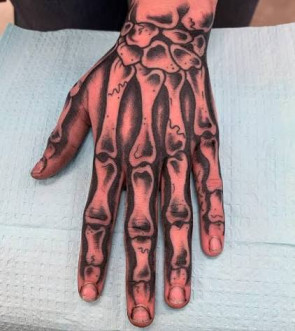
Not for everyone, but easily the most striking style trending right now. The idea is tracing the bones underneath your actual hand, the metacarpals and finger joints, so it looks like an anatomical X-ray sitting on your skin. Done well, with soft blackwork shading and smart negative space, it reads as artistic rather than gimmicky. I met an artist at a tattoo expo who specializes almost entirely in this style, and her healed photos were unsettling in the best possible way.
Variations include dotwork shading, smoky black gradients, and floral details woven into the bones. It suits the entire back of the hand or the fingers and knuckles. This style leans hard on the artist’s actual understanding of anatomy, so check healed examples before booking rather than fresh ones straight out of the chair.
10. Minimalist Single-Line Abstraction:

The easiest style to talk yourself into if you’re nervous about a first hand piece. One continuous line, no lifting the needle, forming an abstract face, a wave, a flower stem, whatever the artist is working toward. No heavy shading, no dense detail.
I recommend this one most often to people asking about a “safe” first hand tattoo, since it heals cleanly and doesn’t depend on tiny details holding up for years. It works nearly anywhere on the hand. The whole appeal comes from restraint, so resist the urge to add extra detail once you’re in the chair.
What a Hand Tattoo Actually Costs?
This is the part most guides skip, and it’s usually the first thing people actually want to know.
Small, simple fine-line pieces, think a single word, a thin vine, or a small constellation, typically run somewhere between $80 and $200 at a shop with a reasonable hourly rate, since most fall under an hour of work. More detailed pieces, like a wrap-around serpent, a symmetrical geometric design, or anything covering the full back of the hand, usually land between $250 and $600, sometimes more depending on the artist’s experience and where you live. Well-known fine-line specialists in bigger cities often charge a flat minimum of $150 to $200 regardless of how small the piece is, just to book the appointment.
Touch-ups for fading fine-line work are frequently discounted or included free within the first six to twelve months, but ask about this policy before you book, since it varies a lot shop to shop.
Numbing Options Worth Knowing About:
Hands are one of the more painful spots to tattoo because of thin skin and dense nerve endings, so it’s worth knowing your options going in. Over-the-counter numbing creams containing lidocaine, applied about 45 minutes before your session under plastic wrap, take the edge off for some people but wear off partway through longer sittings. Ask your artist in advance whether they allow numbing products, since some shops have policies against them because numbed skin can behave differently under the needle. I didn’t use anything for my first piece and found breathing through it in short sets, with breaks every 15 minutes or so, did more for me than I expected.
Taking Care of a Hand Tattoo:
Hands take more daily wear than almost any other tattoo location, so aftercare matters more here than most places.
Wash gently with lukewarm water and a fragrance-free antibacterial soap, then pat dry with a clean paper towel instead of rubbing. Avoid soaking your hands for the first couple of weeks, which means dishes become someone else’s job for a while.
Moisturize lightly with whatever aftercare product your artist recommends. I over-applied lotion on my first piece thinking more was better, and it actually slowed the healing down.
Stay out of direct sun while healing, and once fully healed, get in the habit of sunscreen whenever your hands are exposed. This single habit does more for keeping fine details sharp than anything else on this list.
Peeling and itching are normal. Don’t pick at it, no matter how tempting it gets around day five or six. Give your hands a break from heavy friction while healing. A thin glove helps if you’re doing manual work or lifting.
Mistakes I’ve Watched People Make:
- Chasing a trend instead of meaning: Styles come and go. I still love my botanical piece specifically because it means something to me beyond looking good in photos.
- Ignoring an artist’s actual specialty: Someone can be excellent at large-scale color work and still be the wrong pick for delicate fine-line hand pieces. Check healed photos of hand tattoos specifically, not just their general portfolio.
- Overloading a small space: Hands don’t offer much real estate. Cramming in too many symbols usually turns into a blurry mess within a couple of years.
- Skipping touch-ups: Because of the wear hands take, most fine-line pieces need a touch-up at some point. Budget for it from the start, both financially and mentally.
- Forgetting sunscreen: The cheapest, easiest thig you can do to protect the investment, and the one people skip most.
Common Questions I Get Asked:
How much does a hand tattoo actually cost?
Small fine-line pieces usually run $80 to $200. More detailed or larger designs land between $250 and $600 depending on the artist and your city. Flat shop minimums can apply even to tiny pieces.
Do hand tattoos hurt more than other spots?
Generally yes, since the skin is thinner and there are more nerve endings with less cushioning than fleshier areas like the thigh or upper arm. Pain tolerance still varies a lot person to person.
Can I use numbing cream?
Some shops allow it, some don’t, so ask ahead of time. Lidocaine creams applied under plastic wrap roughly 45 minutes before your session can help, though the effect fades partway through longer sittings.
Will it fade faster than tattoos elsewhere?
Almost always, because of constant sun exposure, washing, and friction. Moisturizing and sunscreen slow that down noticeably.
Do hand tattoos affect job interviews?
It depends heavily on the industry and the specific employer, and this has shifted a lot over the past several years as visible tattoos have become more normalized in office settings. Client-facing roles in more conservative fields are still the most likely place this comes up, so it’s worth considering the specific field you’re in or hoping to enter before choosing a highly visible placement like the front of the hand or fingers.
How long until it fully heals?
Surface healing usually takes two to three weeks. Full healing underneath the skin can take another month or so depending on the design and how well it’s cared for.
Is removal difficult if I change my mind?
Laser removal works on hand tattoos the same way it does elsewhere, though the thinner skin can make sessions slightly more uncomfortable and sometimes requires a few extra sessions compared to removal on fleshier areas. It’s not a quick or cheap prcess either way, which is part of why placement and design choice matter as much as they do going in.
Final Thoughts:
Looking back at that first appointment in Fishtown, I’m glad I went through with it, mostly because the style I chose still feels like me three years later. That’s the thread running through every trend on this list. The best hand tattoo isn’t the one blowing up on Pinterest this month, it’s the one that still makes sense to you five years from now.
Take your time picking an artist. Look at their healed work, not just fresh photos straight out of the chair. Think through placment and cost before you commit to anything, and once it’s done, actually follow through on the aftercare, since your hands work harder than almost anywhere else on your body and the ink deserves the extra effort to hold up.
Whatever direction you land on, whether it’s the futuristic edge of Cyber Sigilism or something as simple as one continuous line forming a wave, make sure it’s something you’re choosing for yourself, not because it looked good on someone else’s feed.

