

Introduction:
Curly hair has never been more celebrated than it is today. Instead of fighting natural texture with excessive heat styling or chemical treatments, more people are embracing their curls and choosing haircuts that enhance their natural pattern. The result is healthier hair, easier styling routines, and hairstyles full of movement, volume, and personality.
In 2026, curly hairstyles are all about working with your natural texture rather than against it. Professional stylists are focusing on strategic layering, balanced shaping, and customized cutting techniques that allow every curl pattern—from loose waves to tight coils—to look its absolute best.
The beauty of curly hair lies in its uniqueness. No two heads of curls are exactly alike, which means the perfect haircut isn’t simply about following trends—it’s about choosing a style that complements your curl type, face shape, lifestyle, and maintenance preferences.
Why Curly Hairstyles Are Trending in 2026?
Curly hair is no longer something people try to hide or straighten every day. Modern hairstyling celebrates individuality, encouraging people to embrace their natural texture through customized cuts that enhance curl definition rather than suppress it.
Today’s trends focus on:
- Natural volume
- Healthy curls
- Personalized layering
- Low-maintenance styling
- Texture enhancement
- Curl definition
- Movement and shape
- Healthy hair routines
Instead of chasing perfectly straight hair, people are learning how to make their curls become their greatest feature.
Understanding Your Curl Type:
Before choosing a haircut, it’s important to understand your natural curl pattern.
Different curl types require different cutting techniques to achieve the best results.
- Loose Waves
Soft waves benefit from long layers that create movement without removing too much weight.
- Defined Ringlets
Springy curls require carefully placed layers that encourage bounce while preventing triangle-shaped volume.
- Tight Coils
Dense curl patterns often benefit from rounded shaping that distributes volume evenly across the head.
- Mixed Curl Patterns
Many people naturally have more than one curl type.
An experienced stylist can customize the haircut to balance these different textures.
How to Choose the Right Curly Haircut?
Selecting the right hairstyle depends on much more than current fashion trends.
Consider these important factors before making your decision.
Face Shape:
- Round faces often benefit from extra height and longer layers.
- Oval faces suit almost every curly hairstyle.
- Square faces pair beautifully with softer layers around the jawline.
- Heart-shaped faces often look best with balanced volume around the chin.
Hair Density:
- Thicker hair usually requires more layering to reduce bulk.
- Fine curly hair often benefits from fewer layers to maintain fullness.
Maintenance Level:
- Some curly styles require daily styling while others look even better with minimal effort.
- Choose a haircut that matches your lifestyle and styling routine.
1. The Curly Shag (Wolf Cut):

The Curly Shag, often called the Curly Wolf Cut, remains one of the most requested curly hairstyles of 2026. Inspired by vintage rock-and-roll cuts, this hairstyle uses heavy layers throughout the hair to remove excess weight while maximizing natural texture. The result is incredible volume around the crown with beautifully defined curls that move effortlessly. Unlike blunt cuts that can make curly hair appear bulky, the Curly Shag creates shape, softness, and dimension.
Why It Works?
- Removing weight allows curls to spring upward naturally, producing greater definition and bounce.
- The layered structure also prevents curls from looking heavy or flat around the sides.
Best Curl Types:
This haircut works especially well for:
- Type 2C waves
- Type 3A curls
- Type 3B curls
- Loose coils
Styling Tips:
Use:
- Curl-defining cream
- Lightweight mousse
- Diffuser attachment
- Wide-tooth comb
Avoid brushing dry curls, as this can disrupt definition and create unnecessary frizz.
Best For:
The Curly Shag suits:
- Oval faces
- Heart-shaped faces
- Thick curly hair
- Medium-length curls
2. The Classic Curly Afro:

The Curly Afro remains one of the most iconic natural hairstyles ever created. Designed primarily for tightly coiled hair, this haircut embraces natural density by shaping the hair into a balanced, rounded silhouette. Instead of reducing volume, the Afro celebrates it, allowing curls to grow outward while maintaining symmetry. Modern Afros often incorporate subtle shaping to better complement individual face shapes while preserving their signature fullness.
Why It Never Goes Out of Style?
The Classic Afro celebrates natural beauty while requiring very little heat styling.
It also protects curl health by reducing unnecessary manipulation.
Best Curl Types:
Ideal for:
- Type 4A
- Type 4B
- Type 4C curls
Styling Essentials:
Maintain healthy definition using:
- Leave-in conditioner
- Curl butter
- Hair pick
- Satin bonnet
Best For:
The Afro works beautifully for people who appreciate bold, confident hairstyles that showcase natural texture.
3. Medium-Length Surfer Curls:

Relaxed, effortless, and naturally textured—Surfer Curls continue dominating men’s and women’s curly hairstyles alike. This medium-length haircut allows curls to fall naturally around the face while maintaining enough length to create movement. Long layers prevent excessive weight, helping curls separate into defined clumps rather than appearing bulky. The result feels casual without looking messy.
Why Everyone Loves It?
Surfer Curls require surprisingly little styling.
With proper hydration, curls naturally settle into soft, beach-inspired texture.
Best Hair Types:
Ideal for:
- Loose curls
- Medium curls
- Thick wavy hair
- Type 2C–3A curls
Styling Tips:
Apply styling cream to damp hair before allowing it to air dry or diffusing gently.
Avoid overloading the hair with heavy products that may flatten the curls.
Best For:
Perfect for:
- Everyday wear
- Students
- Professionals
- Low-maintenance routines
4. The Curly Bob (Heart-Shaped Cut):
The Curly Bob remains one of the most elegant hairstyles for naturally curly hair. Unlike traditional blunt bobs, this version incorporates carefully placed layers that create a rounded or heart-shaped silhouette. Volume is concentrated around the cheeks and crown while maintaining beautiful movement throughout the ends. This balanced shape flatters numerous face shapes while highlighting curl definition.
Why It’s So Flattering?
- Strategic layering prevents the common “triangle effect” that many curly bobs develop.
- Instead, curls remain balanced and soft.
Best Curl Types:
Excellent for:
- Type 3A curls
- Type 3B curls
- Loose ringlets
- Medium-density curls
Styling Advice:
Enhance definition using:
- Curl cream
- Diffuser
- Lightweight oil
- Microfiber towel
Perfect For:
The Curly Bob is ideal for:
- Busy professionals
- Elegant everyday styling
- Wedding guests
- Low-maintenance beauty routines
5. Short & Even All-Over Curls:

Sometimes simplicity creates the strongest impression. The Short & Even All-Over Curly Cut is a clean, low-maintenance hairstyle where curls are trimmed to a consistent length across the entire head, usually between one and two inches. Instead of dramatic fades or disconnected sections, the haircut follows the natural shape of the head, allowing the curl pattern to become the focal point. This style looks neat without appearing overly styled, making it ideal for busy lifestyles.
Why It Works?
Uniform length creates balance while allowing each curl to spring naturally.
The result is a hairstyle that always appears tidy with minimal daily styling.
Best Curl Types:
This haircut works particularly well for:
- Type 3B curls
- Type 3C curls
- Type 4A curls
- Dense curly hair
Styling Tips:
Use lightweight moisturizing products such as:
- Leave-in conditioner
- Curl cream
- Hydrating mousse
- Curl refresher spray
Avoid heavy waxes or pomades that may flatten the natural curl pattern.
Best For:
- Students
- Professionals
- Athletes
- Anyone seeking low-maintenance curls
6. The Messy Curly Fringe:
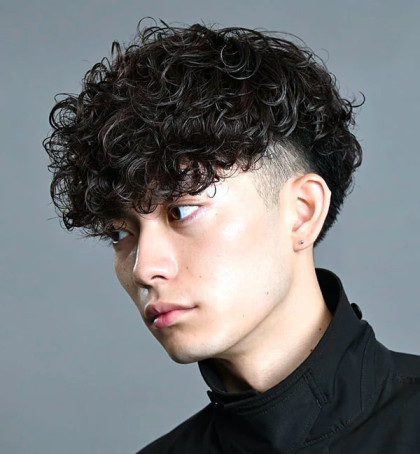
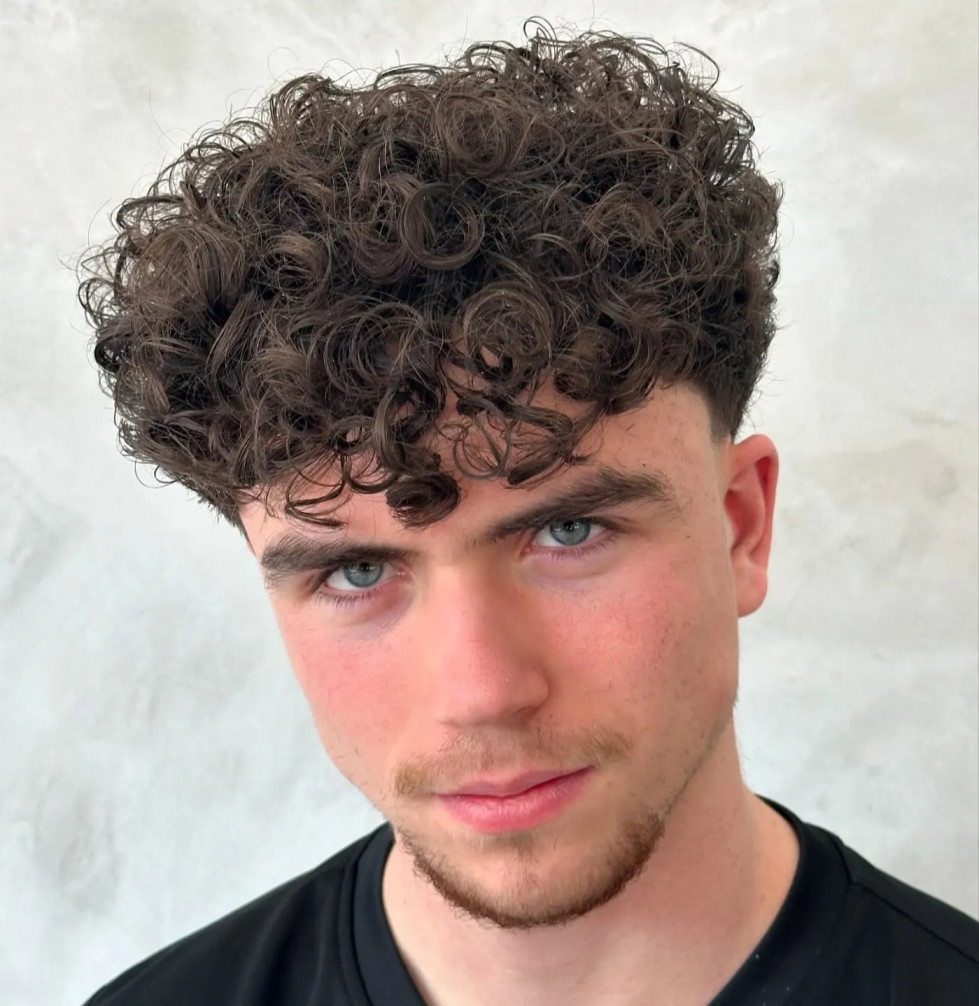
The Curly Fringe remains one of the trendiest hairstyles of 2026. This layered haircut leaves the curls slightly longer around the forehead while keeping the sides and back neatly shaped with scissors rather than clippers. The curls naturally fall forward, creating effortless texture and movement. Unlike straight fringes that require constant maintenance, curly bangs appear softer and more relaxed.
Why Everyone Loves It?
The fringe frames the face beautifully while adding personality without requiring excessive styling.
It also works exceptionally well with naturally voluminous curls.
Best Curl Types:
Ideal for:
- Type 2C waves
- Type 3A curls
- Type 3B curls
Styling Advice:
Apply curl cream to damp bangs before diffusing on low heat.
Avoid touching the fringe while drying to minimize frizz.
Best For:
This hairstyle suits:
- Oval faces
- Long faces
- Heart-shaped faces
- Medium-length curls
7. The Curly Mullet:

The Curly Mullet has evolved from a retro haircut into one of today’s most fashion-forward curly styles. Modern versions feature shorter sides blended with scissors while maintaining generous length through the crown and back. Natural curls soften the transitions, creating movement rather than harsh contrasts. The result feels edgy while remaining surprisingly wearable.
Why It’s Trending?
- Curly texture naturally blends the different lengths together, making the haircut appear softer than traditional mullets.
- This creates a hairstyle full of personality without feeling overly dramatic.
- Best Curl Types:
Excellent for:
- Loose curls
- Medium curls
- Thick curly hair
- Type 3A–3C curls
Styling Products:
For maximum definition, use:
- Curl mousse
- Sea salt spray
- Lightweight gel
- Diffuser
Perfect For:
- Creative professionals
- Fashion lovers
- Musicians
- Anyone wanting a bold style
8. Long Tapered Curls:

Long Tapered Curls offer one of the most elegant ways to wear naturally curly hair. Instead of dramatic fades or undercuts, the hair gradually becomes slightly shorter toward the ears and neckline while maintaining generous length on top. Everything is blended using scissors, creating soft transitions that preserve the natural movement of the curls. The result feels polished without looking overly structured.
Why It Works?
Gradual tapering removes excess bulk while maintaining fullness exactly where it’s needed.
This creates a balanced silhouette suitable for both casual and professional settings.
Best Curl Types:
Works beautifully for:
- Type 3A curls
- Type 3B curls
- Type 3C curls
- Thick curly hair
Styling Tips:
Maintain hydration using:
- Curl cream
- Leave-in conditioner
- Lightweight oil
- Satin pillowcase
Best For:
- Office environments
- Weddings
- Everyday wear
- Special occasions
9. The Grown-Out Messy Quiff:
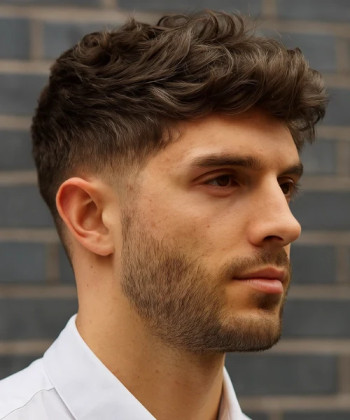
The Grown-Out Messy Quiff combines classic styling with natural curly texture. Unlike traditional quiffs that rely heavily on gels and blow dryers, this version allows your curls to create the volume naturally. The front of the hair is left slightly longer and styled upward and backward, while the curls on top and around the crown remain soft and relaxed. Instead of looking overly polished, the hairstyle embraces controlled texture that feels modern and effortless.
Why It’s Trending?
Modern hairstyles focus on movement rather than perfection.
The Messy Quiff creates impressive volume while maintaining a relaxed appearance that’s easy to wear every day.
Best Curl Types:
This hairstyle works particularly well for:
- Type 2C waves
- Type 3A curls
- Type 3B curls
- Loose textured curls
Styling Tips:
To recreate the look:
- Apply a lightweight curl mousse.
- Lift the front curls using your fingers.
- Diffuse on low heat.
- Finish with a flexible-hold hairspray.
Avoid heavy pomades, which can flatten natural curls.
Best For:
The Grown-Out Messy Quiff is perfect for:
- Everyday styling
- Office environments
- Date nights
- Weddings
- Casual weekends
10. The Side-Parted Curly Mane:

If you love longer curls, the Side-Parted Curly Mane offers one of the most timeless looks of 2026. Rather than changing the haircut itself, this style relies on creating a deep side part that shifts the majority of your curls toward one side of the head. The result is dramatic volume, beautiful movement, and a naturally asymmetrical silhouette. It’s elegant without feeling overly styled.
Why Everyone Loves It?
Changing your part instantly transforms your appearance without requiring a haircut.
The side part also creates additional lift at the roots, making curls appear fuller and more voluminous.
Best Curl Types:
Ideal for:
- Type 3A curls
- Type 3B curls
- Long curly hair
- Medium-length curls
Styling Advice:
Use:
- Curl-defining cream
- Lightweight hair oil
- Wide-tooth comb
- Diffuser
Avoid brushing once the curls have dried to preserve definition.
Perfect For:
- Formal occasions
- Everyday elegance
- Professional settings
- Holiday events
- Special celebrations
The Golden Rule for Full, Healthy Curls: Always Choose a Dry Cut:
One of the most important pieces of advice for anyone with naturally curly hair is choosing a stylist experienced in dry cutting.
Unlike straight hair, curls shrink significantly as they dry. Hair that appears shoulder length while wet may spring several inches shorter once completely dry.
Cutting curls while they’re dry allows your stylist to see:
- Your natural curl pattern
- Individual curl behavior
- Natural shrinkage
- Volume distribution
- Final shape before cutting
This approach produces a much more accurate haircut and helps prevent uneven layers or unexpected length loss.
Benefits of Dry Cutting:
A professional dry cut offers several advantages:
- Better curl definition
- More balanced shaping
- Improved volume placement
- Reduced triangle-shaped hair
- Easier styling at home
- More predictable results
If possible, always look for stylists who specialize in textured or curly hair rather than general haircutting alone.
Common Curly Hair Mistakes to Avoid:
- Even the best haircut can lose its shape if curls aren’t cared for properly.
- Avoid these common mistakes to keep your curls healthy and defined.
Brushing Dry Hair:
- Brushing dry curls separates the curl pattern and often creates unnecessary frizz.
- Instead, detangle during conditioning using a wide-tooth comb.
Washing Too Frequently:
- Curly hair naturally loses moisture more quickly than straight hair.
- Overwashing strips away natural oils, leaving curls dry and brittle.
- Most curl types benefit from washing two or three times per week rather than daily.
Skipping Deep Conditioning:
- Deep conditioning treatments restore moisture and improve elasticity.
- Aim to use a nourishing hair mask at least once each week.
Using Excessive Heat:
Frequent flat ironing or high-heat blow drying weakens curl patterns over time.
Whenever possible:
- Air dry
- Diffuse on low heat
- Use heat protectant products
Ignoring Regular Trims
Split ends travel upward if left untreated.
Scheduling trims every 8 to 12 weeks helps maintain healthy shape while preventing damage.
Building the Perfect Curly Hair Routine
- Consistency is more important than using dozens of different products.
- A simple routine often delivers the best long-term results.
Wash Day:
- Cleanse with a sulfate-free shampoo.
- Apply a moisturizing conditioner.
- Detangle while conditioning.
- Apply leave-in conditioner.
- Finish with curl cream or gel.
Refresh Days:
Between washes:
- Mist curls lightly with water.
- Scrunch in curl refresher spray.
- Smooth frizz using a few drops of lightweight oil.
This extends your hairstyle while maintaining definition.
Night Routine
Protect curls while sleeping by:
- Using a satin bonnet.
- Sleeping on a silk or satin pillowcase.
- Wearing a loose pineapple ponytail for longer curls.
These simple habits reduce friction, minimize breakage, and preserve your hairstyle overnight.
Frequently Asked Questions:
Which curly hairstyle is easiest to maintain?
Short & Even All-Over Curls and the Curly Afro require minimal daily styling while still looking polished.
Is layering good for curly hair?
Yes. Proper layering removes excess weight, improves curl definition, reduces bulk, and creates a balanced silhouette.
How often should curly hair be trimmed?
Most curly hairstyles benefit from a trim every 8–12 weeks to maintain shape and prevent split ends.
Should curly hair be cut wet or dry?
Dry cutting is generally recommended because it accounts for your hair’s natural shrinkage and allows the stylist to shape the curls more accurately.
Which haircut adds the most volume?
The Curly Shag (Wolf Cut), Classic Curly Afro, and Side-Parted Curly Mane are among the best choices for maximizing natural volume.
How can I reduce frizz naturally?
Hydrate your curls regularly, use sulfate-free products, avoid brushing dry hair, sleep on satin pillowcases, and deep condition weekly.
Final Thoughts:
Curly hair is one of the most unique and versatile hair textures, and the right haircut can completely transform how your curls look and feel. Rather than trying to control or hide natural texture, the biggest hairstyle trends of 2026 focus on enhancing every curl with thoughtful shaping, strategic layering, and healthy hair care practices.
Whether you’re drawn to the bold volume of the Classic Curly Afro, the effortless texture of the Curly Shag, the relaxed vibe of Surfer Curls, the polished elegance of the Curly Bob, or the modern appeal of the Side-Parted Curly Mane, each style is designed to celebrate your natural pattern rather than fight against it.
Remember that beautiful curls begin with healthy hair. Regular trims, moisturizing products, gentle styling techniques, and an experienced stylist who understands textured hair can make all the difference. By embracing your natural curls and choosing a haircut that suits your lifestyle, you’ll enjoy hair that’s not only fashionable but also easier to manage every day.