
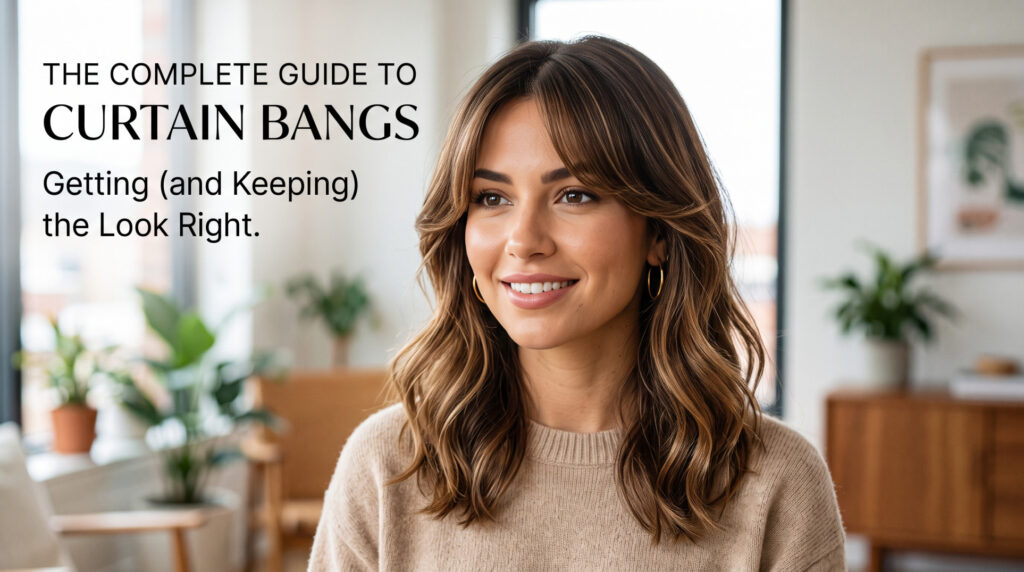
I still remember sitting in the salon chair, staring at a picture on my phone of some celebrity with the perfect wispy fringe framing her face, telling my stylist “I want that.” Three snips later I realized I had no idea what I was actually asking for. That’s the thing about curtain bangs. Everyone wants them. Almost nobody researches them before they end up on the floor of a salon.
If you’ve been eyeing this cut for a while, scrolling past photo after photo and wondering if it would actually work on your face, your hair type, and your daily routine, you’re in the right place. I’ve gone through the growing-out phase, the “why won’t these sit flat” phase, and eventually the “okay I actually love this now” phase. Nine months in, here’s everything I wish someone had told me before I sat down in that chair.
So What Exactly Are Curtain Bangs?
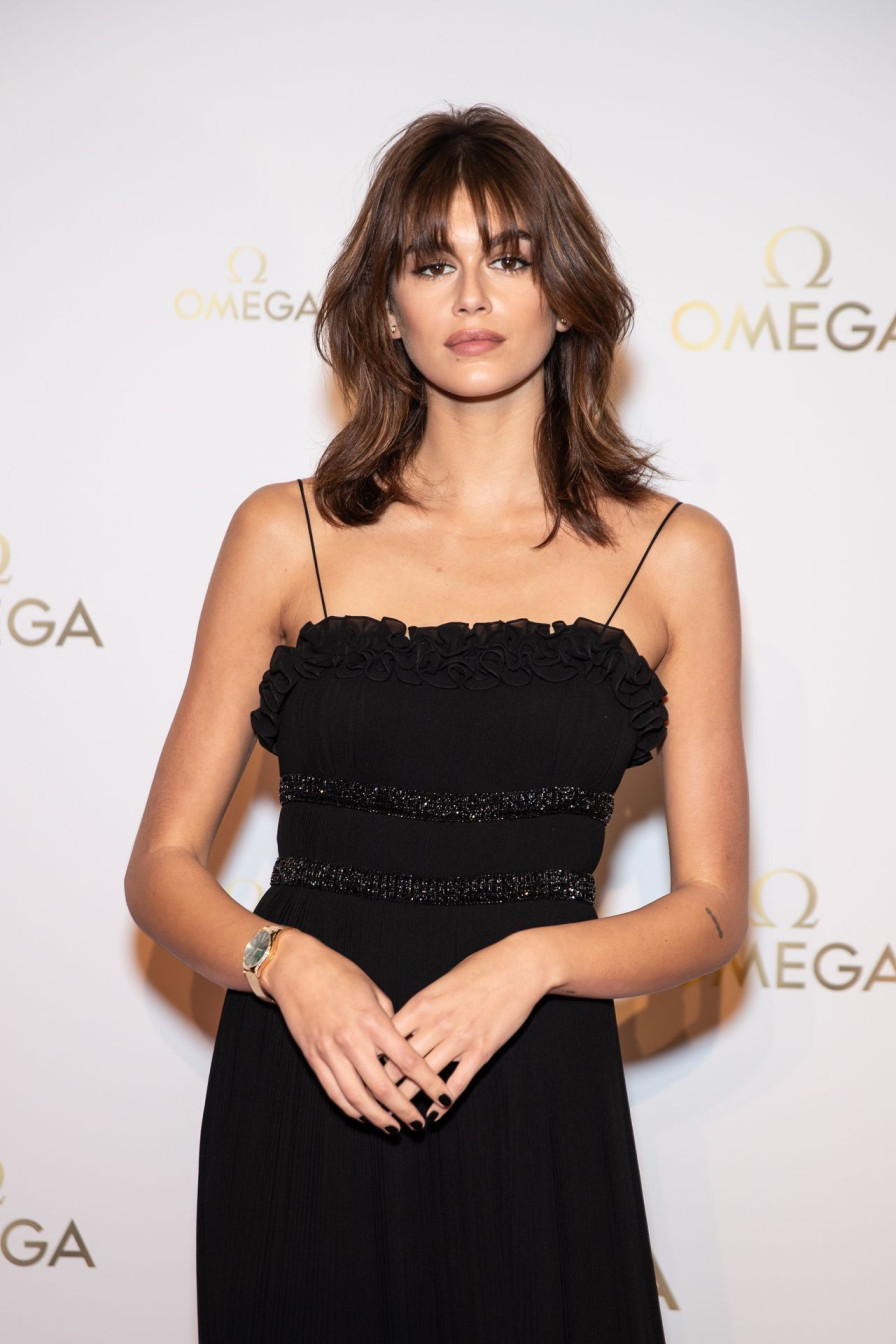
Think of them less like traditional bangs and more like two soft pieces of hair that part in the middle and sweep to either side of your face, kind of like actual curtains framing a window. That’s genuinely where the name comes from.
Unlike a blunt, straight-across fringe, curtain bangs are cut with movement built in. They’re longer on the outer edges and often taper shorter near the center part. That’s what gives them the soft, “I woke up like this” quality, even though there’s usually a fair amount of styling involved to get there.
They became massively popular a few years back and honestly haven’t gone anywhere. There’s a reason they keep showing up on celebrities, influencers, and half the people you see getting coffee on a Saturday morning. They work with almost every hair length as long as you’re willing to put in a little upkeep.
How Much Do Curtain Bangs Actually Cost?
This is the part nobody talks about enough, and it’s the first question I should have asked before booking anything.
At a mid-range salon, cutting curtain bangs into hair that’s already been cut usually runs somewhere between 25 and 45 dollars if it’s done as a standalone “bang trim” appointment. If you’re getting them cut for the first time as part of a full haircut, expect to pay your regular haircut price plus maybe a little extra for the consultation.
Here’s the cost that actually adds up though: the trims. Curtain bangs need shaping every four to six weeks to keep their shape, and most salons charge somewhere between 15 and 30 dollars for a quick bang-only trim between full appointments. Over a year, that’s realistically another 150 to 250 dollars on top of your normal haircut schedule.
Some salons will do bang trims free between full cuts if you’re a regular client, so it’s worth just asking. I didn’t ask for the first four months and paid full price every single time before a stylist told me that was an option.
Should You Actually Get Them:
Here’s where I want to be honest instead of just hyping up the trend. Curtain bangs look effortless in photos. They are not effortless in real life, at least not at first.
Nobody warned me about the oil situation. Bangs sit right against your forehead, which means they soak up sweat, skin oil, and whatever moisturizer or SPF you put on that morning. My hair leans oily already, so I went from washing every three days to needing a bang-specific refresh almost daily.
If you like to throw your hair up and forget about it, ask yourself honestly whether you want something sitting on your face all day. Some days I loved the soft frame around my features. Other days, especially in July humidity, I wanted to clip them back and pretend they didn’t exist.
A few honest questions to ask before booking the appointment:
- Are you okay with more frequent trims, usually every four to six weeks, just to keep the shape?
- Does hair against your forehead bother you, or are you fine with it?
- Do you have ten extra minutes most mornings, or are you strictly wash-and-go?
- Can your budget absorb an extra bang trim roughly once a month?
If most of those answers lean positive, you’ll probably be glad you took the plunge.
Which Face Shapes Work Best?
I’ve heard the claim that curtain bangs suit literally everyone. They’re one of the more universally flattering bang styles, sure, but I don’t think every face shape gets the exact same payoff.
Heart-Shaped and Oval Faces:
These tend to look great with curtain bangs because the fringe softens a wider forehead and brings balance to the whole face. If your face narrows toward the chin, curtain bangs add width right where you want it, around the cheekbones.
Square Faces:
The soft, swept pieces take some sharpness out of a strong jawline. It’s a subtle change, but it reads clearly in photos, especially from the front.
Round Faces:
Curtain bangs can add length and dimension here, especially if your stylist keeps the center pieces a bit shorter and the outer pieces longer, which creates vertical movement instead of adding width.
None of this means you should skip the cut if your face doesn’t fall neatly into one category. Face shape matters, but so does hair texture, your natural part, and your actual styling routine. I’ve seen people break every “rule” and still look amazing because they figured out what worked specifically for them.
Does Hair Length Change the Result?
This gets overlooked constantly, and it changed my whole experience.
- On a bob or lob (long bob): curtain bangs read as very soft and rounded, almost vintage. The shorter overall length means the bangs blend into the rest of the cut faster, so there’s less of an awkward in-between phase.
- On shoulder-length hair: this is probably the most popular length for curtain bangs right now, and for good reason. There’s enough length for the bangs to sweep and tuck behind your ears when you want them out of your face, but they still frame things nicely when left down.
- On long hair: curtain bangs tend to look longer and heavier at first, closer to face-framing layers than a true fringe, until they’re styled with a round brush to create lift and shape. If you have long hair and go with a shorter, more traditional curtain length, expect a bigger visual change than someone with shoulder-length hair getting the same cut.
Curtain Bangs If You Wear Glasses:
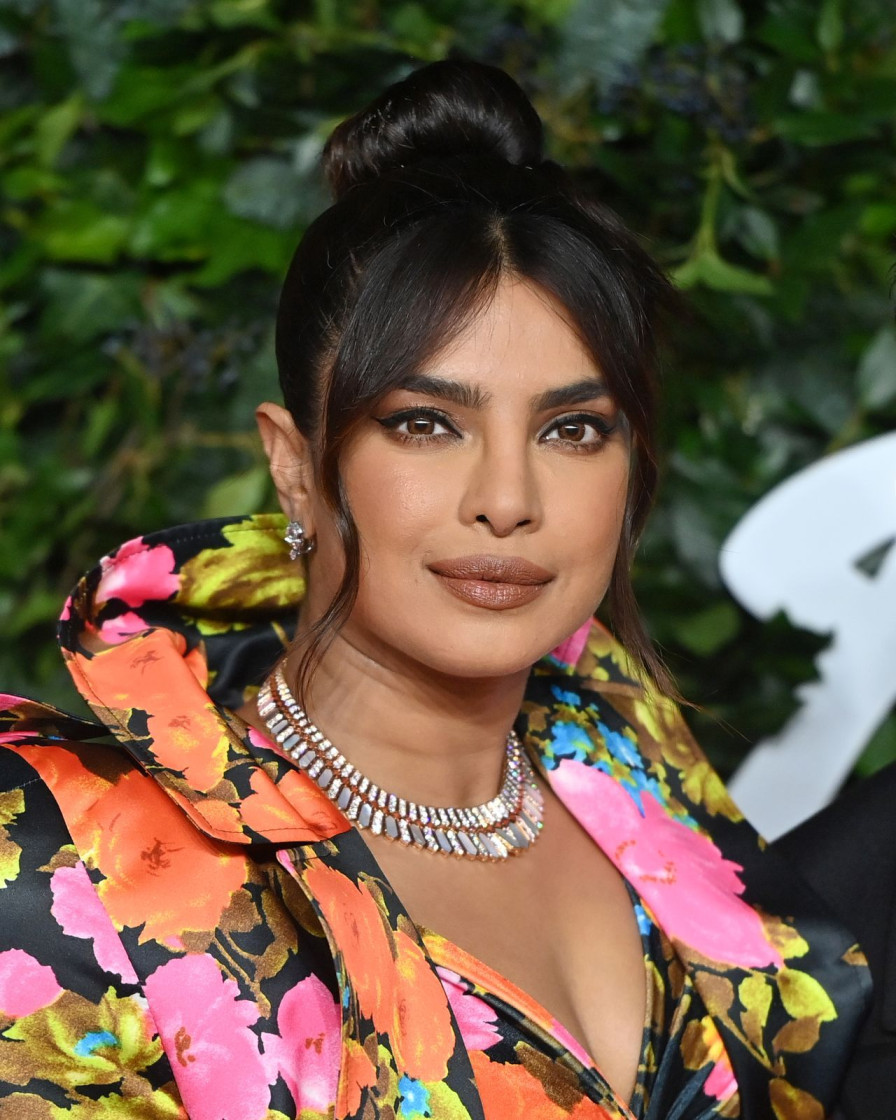
I get asked this constantly, so it’s worth its own section. Glasses and bangs can absolutely work together, but frame placement matters more than people expect.
If your glasses sit low on your nose, longer curtain bangs that hit around cheekbone length usually avoid clashing with the frame line. If your glasses have a higher bridge or thicker top frame, slightly shorter bangs that stop above the brow line tend to look cleaner and avoid a cluttered look around your eyes.
The other practical issue is oil transfer from your glasses touching your forehead and bangs throughout the day, which speeds up that greasy-root feeling. A quick swipe with an oil-absorbing sheet or a small dusting of dry shampoo at the hairline handles this without needing a full restyle.
Curtain Bangs vs Face-Framing Layers:
People mix these up constantly, myself included at first. Face-framing layers are longer pieces that taper down along the sides of your face, usually hitting around the cheekbone or lower, and they blend into the rest of your haircut.
Curtain bangs are shorter, sit higher, and are cut specifically to part down the middle of your forehead. They’re often the only “layer” cut around the face, where face-framing layers are more of a gradual blend into your existing length.
If you want something dramatic and face-changing, curtain bangs are the bigger commitment. If you want something more subtle that still adds movement, face-framing layers are the gentler option.
Getting the Cut Right:
Please don’t try to cut these yourself. I know it’s tempting after watching a five-minute video online, but I made this mistake once with kitchen scissors and spent the next two months growing it back out evenly.
Bring reference photos to your appointment, but also be upfront with your stylist about your actual hair texture and lifestyle, not just the photo. Stylists constantly deal with clients showing up with a picture of a completely different hair type expecting the exact same result on their own head.
One trick that genuinely helped me before my appointment was sitting in front of a mirror and studying my own face shape instead of guessing. Look at where your face is widest, whether your jawline is more angular or soft, and how your forehead compares to your chin. It sounds a little silly, but showing up with that awareness makes the consultation so much smoother, and it gives your stylist something real to work from instead of just a screenshot.
Why Do Curtain Bangs Curl in Ways You Didn’t Ask For?
If your bangs have ever flipped out at the ends in a way you didn’t plan, you’re not imagining it, and it’s not a bad haircut. There are two real reasons this happens, and understanding them actually changes how you style around the problem.
Reason one: your natural texture is showing through: If your hair has any wave or curl at all, your bangs will reflect that pattern, especially once they pick up humidity or sweat throughout the day. Bangs sit closer to your skin than the rest of your hair, so they react to moisture faster than your length does. This is why bangs can look perfectly straight at nine in the morning and completely different by two in the afternoon.
Reason two: the angle of the cut itself: When bangs are cut at an angle rather than straight across, which is standard for curtain bangs, the ends are structurally set up to curl outward or inward once they dry, because the weight distribution along an angled edge is uneven. A straight-across blunt fringe usually just falls flat. An angled curtain fringe almost always wants to move somewhere.
The fix in both cases is the same: dry your bangs with intention instead of letting them air dry into whatever shape they land on. Section them, use a round brush in the direction you actually want the ends to sit, and if you’re prone to strong flip-out at the ends, a very light run of a flat iron over just the last inch, curved outward, will lock the direction in place for the rest of the day.
How I Style Mine Step by Step?
This part took the most trial and error. Here’s what eventually became my actual morning routine.
Step one: dry them in the opposite direction first Right after washing, I blow-dry my bangs downward using a flat paddle brush, like the Wet Brush Pro Detangler. This resets the direction and knocks out the initial frizz before shaping begins.
Step two: shape with a small round brush I switch to a one-inch ceramic round brush, hold it vertically, and blow-dry to create a soft outward flick at the ends. This is the actual step that gives curtain bangs their signature shape instead of just laying flat.
Step three: add lightweight hold at the root On humid days I use a small amount of a volumizing root spray, something like the Bumble and Bumble Thickening Dryspun texture spray, applied only at the roots before drying. A heavy product here weighs the bangs down and defeats the entire point.
Step four: lock it in fast if you’re rushed A mini flat iron, curved slightly downward and outward at the ends, gets close to the round brush result in about a third of the time, just with a little less bounce and volume.
For curly or coily hair, the process looks different. Two-strand twists or finger coils on damp hair, left to set and gently separated once fully dry, give the most natural definition without frizz. A diffuser on a cool, low setting also helps a lot when you’re short on time, and a lightweight curl cream applied before twisting helps hold the shape through humidity.
If you prefer air drying, that’s a completely valid option, especially if your cut and texture already work together. Just know air drying usually means less structure and a more relaxed, undone look, which plenty of people genuinely prefer.
Common Mistakes People Make With Curtain Bangs:
I’ve made almost every one of these myself, so treat this as the “learn from my mistakes” section.
- Skipping heat protectant:
Bangs get styled far more often than the rest of your hair, so they take noticeably more heat damage over time. A quick spritz of something like Olaplex No.7 Bonding Oil before blow-drying or flat ironing makes a real difference in how healthy they look after a few months.
- Using too much product:
It’s tempting to load up on mousse or spray for hold, but too much product weighs bangs down and makes them look greasy by midafternoon. A small amount goes a long way here, especially at the roots.
- Waiting too long between trims:
Curtain bangs grow out unevenly faster than expected. What starts as a soft face frame can turn into an awkward in-between length within just a few weeks if you skip your regular trim window.
- Ignoring your natural texture:
If you have curly or wavy hair and you’re fighting it with a flat iron daily, you’ll burn out fast, both your hair and your patience. Working with your natural pattern instead of against it gives a longer lasting, healthier result.
- Not accounting for glasses or an active lifestyle:
If you wear glasses, work out often, or spend a lot of time outdoors, factor that into your length choice at the consultation. Bangs that work perfectly for someone who’s mostly indoors at a desk can be genuinely annoying for someone running or cycling regularly.
Keeping Them Looking Good Day to Day:
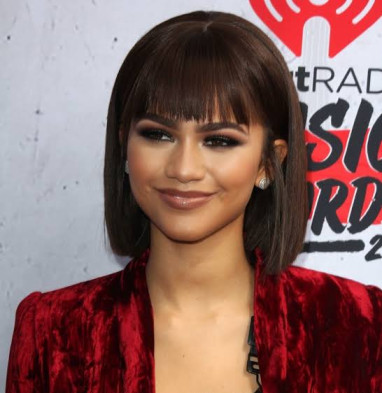
Maintenance really is the make-or-break factor with this haircut, more than the initial cut itself:
- Dry shampoo became a non-negotiable part of my routine, whether it’s a spray like Batiste or a loose powder version. Applying it right at the roots of your bangs each morning instantly refreshes them and adds grip for styling.
- Trims every four to six weeks are essentially mandatory to maintain the shape, since bangs sit right in your eyeline and any unevenness becomes obvious fast.
- For curly or textured hair, refreshing your bangs every day or two with a bit of water or a lightweight styling mist revives the curl pattern without a full restyle.
- Flat, creaseless clips are a genuine lifesaver on days when a cowlick has opinions about your part. I keep two in my bag specifically for this.
A Few Trending Curtain Bangs Styles Worth Trying:
If you’re not sure exactly which version to ask for, here are variations that have worked well across different hair types and face shapes.
The Sleek Center Part:
Great if your hair is naturally straight or you don’t mind a quick flat iron session. A crisp, defined center part with smooth bangs on either side gives a polished look that lasts most of the day, especially with a little dry shampoo at the roots if things start feeling limp.
Layered and Blended Curtain Bangs:
If you want your bangs to feel like part of your overall haircut rather than a separate piece, ask your stylist to blend the shortest layers starting around your cheekbones. This softens the transition and adds movement without a harsh line.
Blunt Fringe With Curtain Shaping:
A bolder option that works particularly well on thicker hair. Instead of wispy ends, you get a more defined line that still curves gently at the temples, which reads as more structured and intentional.
Face-Framing Curtain Bangs:
For anyone who wants the fringe to draw attention toward the jawline rather than the forehead, this version keeps the shortest pieces near the brow and lets the length taper down toward the chin.
Soft Wispy Bangs:
If your hair is fine or thin, this lighter version avoids the heavy, dense look that a fuller fringe can create. Point-cutting the ends removes bulk while keeping the curtain shape, and it grows out far more gracefully than a blunt version.
Quick FAQ:
Do curtain bangs work on fine hair? Yes, but ask your stylist for a wispy, point-cut version rather than a dense blunt fringe, which can look thin and stringy on fine hair.
How long does it take to grow curtain bangs out if I change my mind? Roughly six to twelve months to blend fully into a longer layer, depending on how fast your hair grows. Face-framing layers or clips can bridge the awkward middle stretch.
Can I still wear curtain bangs if I work out a lot? Yes, but expect to rely on dry shampoo and clips more often, and consider a slightly shorter length so sweat doesn’t stick them directly to your forehead.
Do curtain bangs work with color-treated hair? Yes, though bleached or heavily processed bangs tend to be more porous and prone to frizz, so a lightweight leave-in conditioner before styling helps a lot.
Final Thoughts and a Quick Decision Checklist:
Curtain bangs earn their popularity, but they’re not a completely effortless decision. They ask more of your routine, your salon budget, and your patience during that first awkward growing-in stretch.
Before you book the appointment, run through this quick checklist:
- You’re fine with a bang trim roughly every four to six weeks, budget included
- You have five to ten minutes most mornings for a quick style
- You know your face shape and hair texture, not just a celebrity photo
- You’ve thought about how glasses, workouts, or humidity in your climate might affect them
If you can check off most of that list, you’ll probably be glad you took the plunge. My honest advice either way is to go in for a real consultation first rather than committing on the spot, and to ask your stylist specific questions about your hair instead of just handing over a screenshot. That one conversation saves a lot of trial and error down the road.