

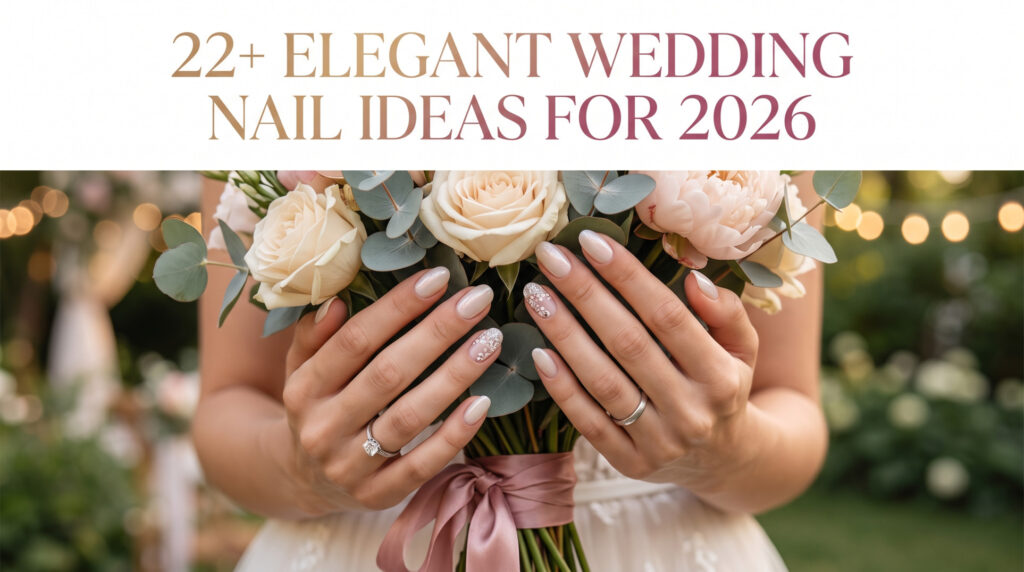
I still remember sitting in the salon chair three days before my cousin’s wedding, forty tabs open on my phone, completely panicking over a decision that should have taken ten minutes. Half the designs I’d saved looked stunning on Pinterest and completely wrong once I held my hand up next to my own skin tone. The other half felt so safe I worried they’d look boring next to the dress.
Nobody tells you this part: picking wedding nails isn’t really about finding the prettiest design. It’s about finding something that survives a twelve-hour day, doesn’t fight with your dress or your ring, and still looks good when you pull the album out in fifteen years.
Since that appointment, I’ve sat through the process again for my own wedding and helped two friends pick theirs. I’ve also made the mistake of booking too erly and watching a manicure chip by the rehearsal dinner, so I know exactly which parts of this process actually matter and which ones are just noise. This guide is the one I wish I’d had, minus the guesswork.
Why Wedding Nails Get More Camera Time Than You’d Expect?
Your hands end up in more photos than almost any other part of your outfit. The ring shot. The bouquet portraits. Cutting the cake. That candid moment where your hand is resting on someone’s shoulder mid-laugh. A chipped edge or a color that clashes with your skin tone is the kind of thing you won’t notice in the moment but will notice in every photo for the rest of your life.
The reassuring part is that 2026 isn’t asking for anything dramatic. Bridal nails this year have moved toward what the beauty industry has started calling “quiet luxury” soft finishes, fine shimmer, colors that barely announce themselves. Nothing competing with your dress or your ring for attention.
What’s Actually Trending for Weddings in 2026?
The chunky glitter and rhinestone-heavy nails that dominated a few years back have mostly faded out. What’s replacing them:
- Sheer nude bases that look like an upgraded version of your natural nail
- Milky white finishes, closer to glass thn to chalk
- Pearl chrome instead of the harsher silver chrome from 2023–2024
- Micro French tips, noticeably thinner than the traditional French manicure
- Soft ombré fades
- Small, single-nail floral details instead of full nail art
- Fine metallic linework
- Glossy, almost wet-look topcoats like OPI’s Top Coat or CND’s Shellac finish
Every one of these works whether you’re getting married on a beach at noon or under string lights at nine at night.
How to Actually Pick the Right Design?
Before falling for something off Pinterest, run it through this filter it’s the one that saved me from a design I would’ve regretted.
Start with your dress: A minimal, clean gown pairs beautifully with a glazed finish or a thin metallic French tip, since both share that same understated energy. Lace gowns tend to work better with delicate floral nail art or small pearl accents, echoing the texture without competing with it.
Factor in your jewelry: Gold jewelry looks incredible against champagne shimmer or fine gold pinstripes. Silver or platinum settings photograph better with pearl chrome and cool pastels — warm tones can actually wash out next to white metal in photos.
Match your venue’s mood: Beach weddings call for soft blues and seafoam. Garden weddings pair naturally with florals and pastels. Clssic ballroom weddings hold up best with a timeless neutral you won’t second-guess a decade from now.
Nail Shape: The Detail Most Brides Skip
Shape matters as much as color, and it’s the one thing most guides skip entirely.
- Almond: elongates the fingers and is the most requested bridal shape for a reason it photographs well in nearly every hand position.
- Oval: is a softer, shorter version of almond and works well if you don’t want length.
- Soft square: suits brides who want a modern look without sharp corners catching on lace or veils.
- Coffin: (tapered square) reads more editorial and pairs well with bolder colors like terracotta or hot pink.
- Round: is the most low-maintenance shape and works especially well on shorter natural nails.
If you’re unsure, almond or soft square are the safest starting points they suit almost every hand shape and grow out the most gracefully if your wedding is more than a few weeks after your first fitting appointment.
Gel, Acrylic, Dip, or Press-On: What Actually Holds Up on Wedding Day
This is the question I get asked more than any other, and it deserves a real answer instead of a one-line mention.
- Gel polish: is the most popular choice for weddings and for good reason. It resists chipping for 10–14 days, dries hard under UV or LED light, and gives the glossy finish most of the designs on this list are built around. The tradeoff is that removal requires soaking in acetone, which can weaken natural nails if done too often.
- Acrylics or hard gel extensions: make sense if your natural nails are short or you want extra length for a specific shape like coffin or long almond. They’re more durable for a full weekend of wedding events but require more upkeep afterward and a proper soak-off removal.
- Dip powder: lands in between durable, less damaging than acrylic, but the finish tends to be less glass-like than gel, so it’s not ideal for the pearl or glazed looks on this list.
- Press-on nails: have genuinely improved. Brands like Glamnetic, Static Nails, and Kiss Impress now offer reusable, salon-quality press-ons that can be applied the morning of the wedding in under twenty minutes. This is a solid option if you don’t want a salon appointment during wedding week or if you wnt a design that’s hard to find locally.
What a Bridal Manicure Actually Costs?
Pricing varies a lot by region, but as a general range: a standard gel manicure runs $35–$60, while bridal-specific appointments with nail art, chrome finishes, or pearl accents typically run $65–$120 depending on how much detail is involved. Press-on sets from the brands mentioned above generally run $15–$30 and can be a smart backup if your salon appointment falls through closer to the date.
Getting Your Nails Ready Beforehand:
Healthy nails are what actually make a manicure look expensive, not the polish itself.
- Apply cuticle oil nightly for at least two weeks before the wedding
- Book your appointment one to two days before the ceremony, not the morning of and not a week early
- Wear gloves for any deep cleaning in the days leading up
- Stop using your nails as tools — I know, easier said than done
- Drink more water than usual; it genuinely shows in how your nails and skin look together in close-up shots
24 Wedding Nail Designs to Try in 2026:
1. French Tips with a Metallic Pinstripe:

A classic French manicure gets one small addition: a fine gold or champagne line running just beneath the white tip. It’s a small detail, but under reception lighting it reads as noticeably more expensive than a plain French. Works well on almond, oval, soft square, or coffin shapes, and pairs especially well with gold jewelry. Ask for a thin metallic pinstripe rather than glitter.
2. Reverse French (Half-Moon Detail):

Instead of the tip, the color sits at the base of the nail in a soft half-moon shape, done in ivory, champagne, or pearl. It’s a quieter alternative to the standard French and tends to suit shorter nail lengths better, since it doesn’t rely on tip length to show up.
3. Pearly “Glazed” Nails:
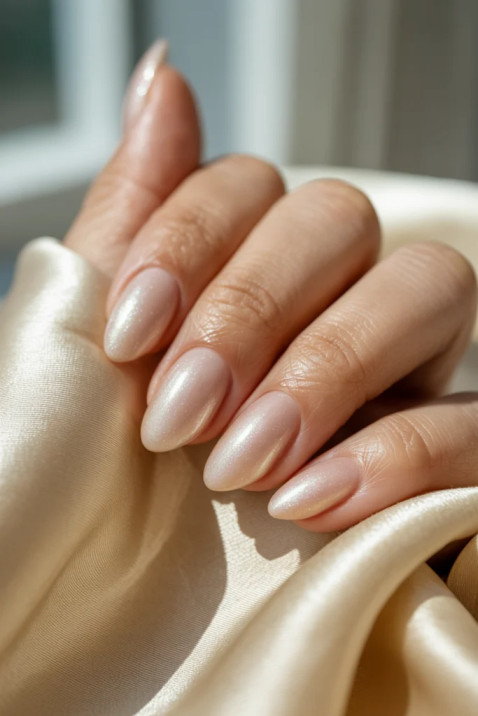
The glazed trend has softened since it first went viral 2026’s version uses a pearl shimmer over sheer pink or nude rather than icy chrome, which reads as warmer and more bridal in photos. This is the design I get asked to recreate the most.
4. Opal Glow:

An iridescent shimmer over a translucent nude base that shifts color slightly depending on the angle of light. This is my personal favorite on the list it photographs almost like your nails are lit from inside, and it works beautifully for outdoor or snset ceremonies.
5. Champagne Shimmer:

A warm, fine-particle shimmer that catches candlelight at evening receptions without looking heavy. Ask specifically for micro-shimmer rather than a chunky glitter polish, which can look dated in close-up photos.
6. “Something Blue” Accent:

Instead of painting every nail blue, this puts the tradition on a single accent nail a tiny dot, a small painted flower, or one small gem. It’s a nice way to keep something sentimental in the look without changing the overall palette.
7. Baby Blue Micro French:

A pale pastel blue tip in place of the traditional white. The key is keeping the tip thin a thick blue line can start to look more like a bridesmaid’s nails than a bride’s.
8. Soft Sage:

Sage has become one of the most requested wedding colors this year, and it translates surprisingly well onto nails. It’s muted enough to read as close to neutral in photos while still adding a hint of color for garden or botanical-themed weddings.
9. Petal Pink Ombré:
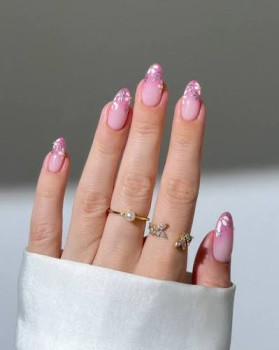
A blush pink fading into milky nude. The gradual transition elongates the nail visually, which is part of why it photographs so well in close-up ring shots.
10. Milky White Ombré:

If you genuinely can’t decide, this is the safest option on the entire list. A soft white fading into sheer nude works with every dress style, every venue, and every skin tone.
11. Pressed Flower Accent:
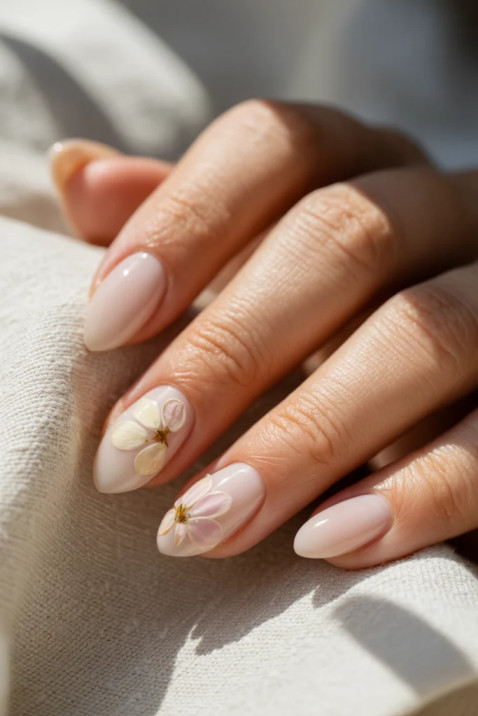
Tiny drid flowers set into clear gel on one or two accent nails. This has more texture and individuality than printed floral nail art since no two pressed flowers look exactly alike a small detail that photographs surprisingly well up close.
12. Hand-Painted Wildflower Tips:
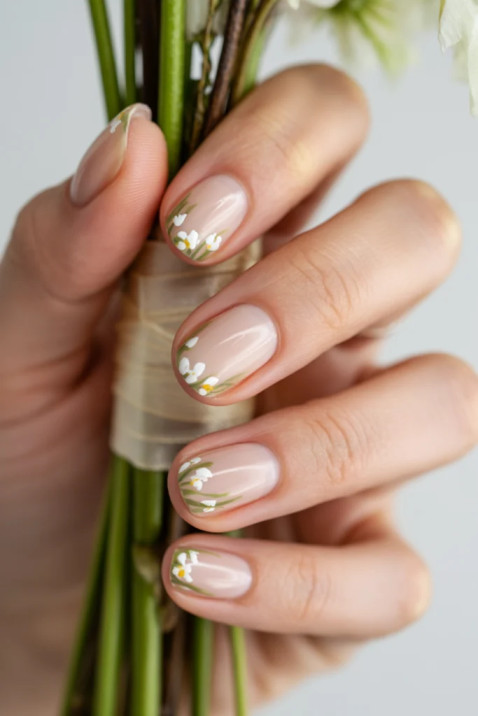 Small wildflowers painted along the tip only, leaving most of the nail bare. Works well for spring weddings or anywhere the bouquet features loose, wild-style florals rather than structured arrangements.
13. Minimal Line + Dot Art:

One or two thin lines or a few small dots, nothing more. This reads as intentional and modern rather than decorative, and it’s a good option if you want some detail without full nail art.
14. Pearl Accents:

Small flat-back pearls placed on one or two nails, not all ten. Coordinates well if you’re already wearing pearl jewelry or have pearl detailing on your veil or gown.
15. Short Rounded Sheer Neutral Nails:
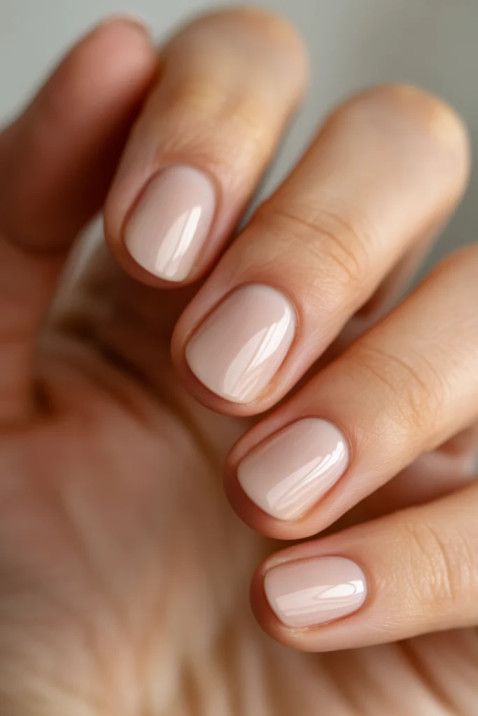
You don’t need length for this to look elegant. Short, rounded, glossy, sheer pink or nude genuinely one of the most practical options if you’re an active bride who doesn’t want to think about her nails during the reception.
16. Coral Pop:

A soft, creamy coral rather than anything neon. Adds warmth for tropical or sunset ceremonies without pulling focus from the rest of the look.
17. Peach Sorbet Gloss:

A warm peach with a glass-like glossy topcoat. Especially flattering if you’ll have any sun on your skin before the wedding, since it warms up rather than washes out against a tan.
18. Terracotta Sunset:

A muted burnt orange that pairs well with dried florals and earthy decor. Works especially well for boho or rustic weddings in late summer or fall.
19. Lavender Chrome:
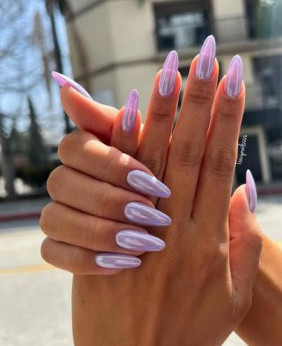
A pale lavender base topped with a soft chrome finish dreamier and less harsh than a typical silver chrome, and it shifts nicely under string lights or candlelight.
20. Soft Butter Yellow:
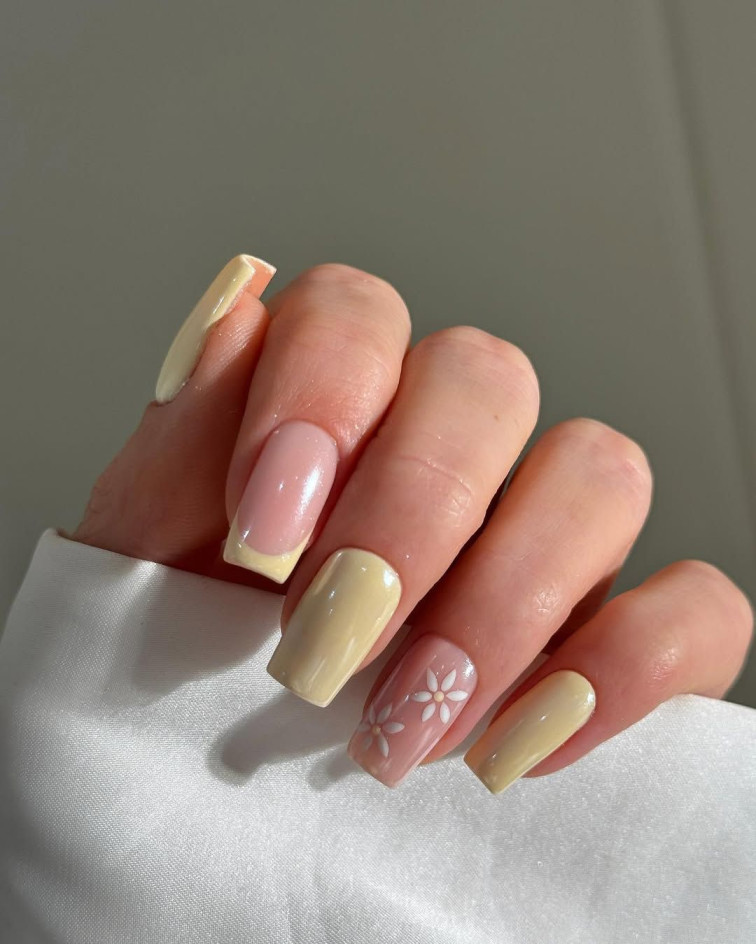
Butter yellow has been everywhere in fashion this year and translates well to nails too creamy and muted rather than a bold, saturated yellow. Works nicely with sunflower or daisy-heavy bouquets.
21. Seafoam Green Gloss:
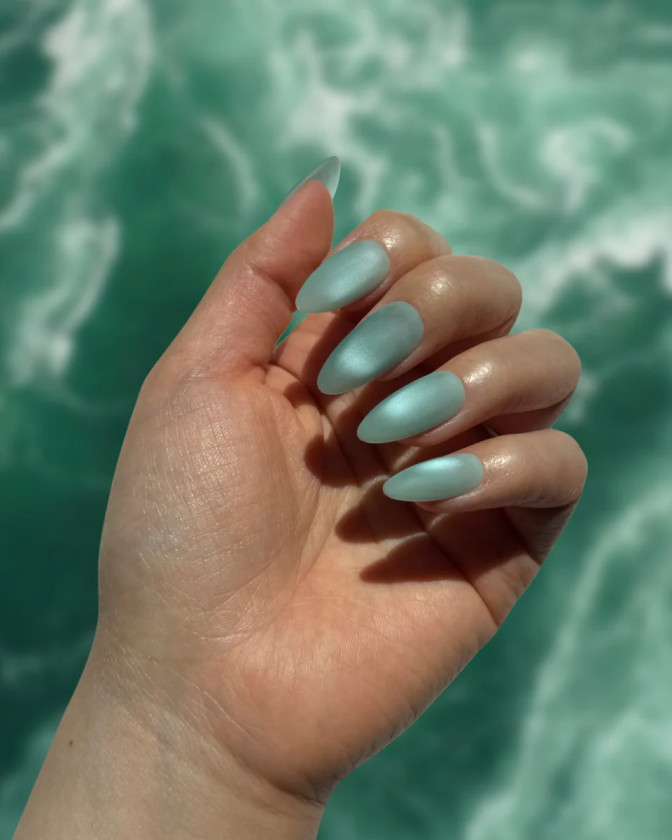
A soft mint-green with a glassy tpcoat, calm enough to work against ocean views or linen table settings without competing with the scenery.
22. Sky Blue Solid:

A full pastel sky blue rather than a single accent nail a more modern take on “something blue” that still reads as soft and bridal rather than bold.
23. Hot Pink Statement Nails:
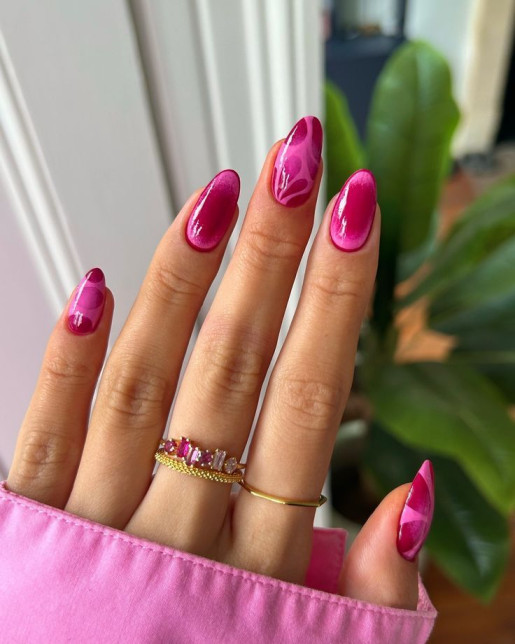
For brides who want color and aren’t interested in toning it down, a rich fuchsia with a glossy finish works well for destination weddings or the bachelorette weekend specifically, even if the ceremony itself calls for something quieter.
24. Sheer Strawberry Tint:

A barely-there rosy jelly polish that enhances the natural nail rather than covering it. One of the easiest looks to keep wearing well after the wedding, since it doesn’t scream “bridal” the way some of the more elaborate designs do.
Common Mistakes to Avoid:
Chasing the trendiest possible design: Trend-heavy nail art tends to look the most dated in photos five or ten years out. A timeless neutral or soft pastel ages better than almost anything flashier.
Booking your appointment too early: A manicure done a week out will likely be chipping by the ceremony. One to two days before is the actual sweet spot.
Skipping nail prep: Polish looks better on healthy nails than any product can fake on its own. Start the cuticle oil routine at least two weeks out.
Overloading every nail with detail: Your ring should be the focal point of close-up photos, not competing with ten nails’ worth of art.
Not packing a touch-up kit: Bring a cuticle oil pen, a small nail file, nail glue if you’re wearing press-ons, and a topcoat. Long wedding days create small emergencies.
Nail Aftercare After the Wedding:
Once the wedding’s over, give your nails a break before jumping into your next set. If you had gel or acrylic, get it professionally soaked off rather than picking at it peeling gel polish takes layers of your natural nail with it. After removal, a week or two of just cuticle oil and a strengthening base coat, with no polish, helps nails recover before your honeymoon photos or a following event.
Frequently Asked Questions
What nail color is most popular for weddings in 2026?
Milky white, glazed pearl, sheer pink, champagne shimmer, sage, and baby blue are the shades coming up most often in bridal appointments this year.
What’s the most flattering nail shape for a wedding?
Almond and oval are the most consistently requested because they elongate the fingers and read well in every ring-shot angle.
How far ahead should I book my appointment?
One to two days before the wedding. Any earlier risks visible chipping by the ceremony.
Gel, acrylic, dip, or press-on which should I actually choose?
Gel if your natural nails are healthy and you want the glossiest finish. Acrylic or hard gel if you need extra length. Press-ons from brands like Glamnetic or Static Nails if you want a specific design without booking a salon appointment during wedding week.
How much should I expect to pay?
Standard gel maicures run roughly $35–$60. Bridal-specific designs with chrome, pearl, or hand-painted detail typically run $65–$120 depending on your area and how intricate the design is.
Can I wear color, or does it have to be neutral?
Color is completely fine. Muted shades like coral, sage, lavender, peach, and soft blue still read as elegant they just add a bit more personality than a plain nude.
Final Thoughts:
Your wedding nails won’t make or break the day, but they’ll show up in more photographs than almost anything else you’re wearing, which is exctly why this decision feels bigger than it should.
Whatever you land on the classic elegance of a metallic French tip, the quiet glow of glazed pearl nails, or something with more color like terracotta or seafoam pick the one that feels like you rather than the one that’s trending hardest this month. That’s the one you’ll still like looking at twenty years from now.
Start the prep early, book the appointment with the right buffer, and don’t overthink the rest. You’ve got this.