I still remember sitting in my colorist’s chair last October, staring at a stack of hair magazines and feeling absolutely stuck. My summer balayage had grown out into this weird in-between stage half sun-bleached, half regrowth and I had zero idea what to ask for. My colorist, Renata, has been doing color for almost fifteen years, and she finally put the swatch book down and said, “Forget the pictures for a second. Tell me what season it feels like outside, and I’ll tell you what your hair should feel like.” That one sentence changed how I think about hair color every year since.
That’s basically what this list is. Every fall, my group chat with my sister and two friends turns into a nonstop stream of screenshots from Pinterest and salon Instagram pages, all of us trying to figure out what to do before the holidays hit. So I pulled together the shades that keep showing up everywhere this year, the ones Renata keeps mentioning to clients, and a few I’ve tried myself with mixed results. Some were amazing. One was a genuine mistake I’m still growing out.
If you’re staring at your roots right now wondering whether it’s time for a change, here’s everything I’ve learned about picking a fall-to-winter color that actually works for your life not just your Pinterest board.
Why Your Hair Color Should Change With the Seasons?
Here’s something nobody told me for years: the exact same hair color can look completely different depending on what’s happening around it. Come October, my closet fills up with camel coats, burgundy sweaters, and dark denim, and my bright summer blonde suddenly looked washed out next to all that richness. It wasn’t the color that changed. Everything around it did.
Deeper, warmer tones do more work once the light changes. Fall and winter mean shorter days, more time under indoor lamps and office fluorescents, and clothing in heavier, denser colors. Har with some depth to it whether that’s warmth or cool shine catches artificial light in a way pale summer shades just can’t. Renata explained it to me this way: platinum and pastel blondes are built to catch sunlight, so under a 60-watt bulb in December, they can look flat instead of luminous. A color with more pigment saturation reflects that same weaker light back with more contrast, which reads as healthier and more polished on camera, in a work meeting, or at a holiday dinner where the lighting is doing you zero favors.
How to Actually Pick the Right Shade for You?
Before you screenshot anything and bring it into your salon, it helps to think through a couple of practical things first, because the prettiest photo online doesn’t mean much if it fights against your skin tone or your actual schedule.
Start with your skin tone: If you tend to look better in gold jewelry than silver, you’re probably warm-toned, and shades like copper, honey blonde, caramel, and golden brown will make your skin glow instead of looking sallow. If silver jewelry suits you more and you burn easily in the sun, you’re likely cool-toned, and ash blonde, espresso, platinum, or burgundy tend to work better. Can’t tell which camp you’re in? You’re probably neutral, and most colors on this list will work for you either way.
Be honest about your maintenance tolerance: I made the mistake of going platinum blonde one January because it looked stunning on Pinterest, and I did not account for needing root touch ups every three weeks or my hair looking like a bad accident by week five. If you barely have time to blow-dry your hair most mornings, look at balayage, ombre, or a rich all-over brunette instead they grow out gracefully instead of announcing themselves the moment your roots show.
Bring the right words, not just a photo: Colorists work off technique names as much as color names. Ask for “balayage” if you want hand-painted, sun-kissed pieces with soft regrowth. Ask for “foilyage” if you want that same soft blend but with slightly more lift and brightness. “All-over color” or “single-process” means one flat shade root to tip. Knowing these terms means you’ll walk out with what you actually pictured instead of something close to it.
Have a rough budget in mind: Prices vary a lot by city and salon tier, but as a general range: single-process color often runs $70–$150, balayage or foilyage typically lands between $150$350, and full platinum or fantasy color transformations can run $250–$500 or more, especially if multiple sessions are needed to lift dark hair safely. Ask for a consultation quote before you sit down a good colorist will give you a real number, not a vague estimate.
The Colors Everyone’s Actually Asking For This Season
This one’s for anyone who misses those bold 90s chunky highlights but wants them styled in a way that feels current instead of costume-y. A deep espresso base stays put while thick vanilla blonde pieces frame the face and run through the front sections. Ask your colorist for “face-framing chunky highlights” specifically the contrast here is meant to be seen, not blended. It’s most flattering on naturally dark brunettes with cool or olive undertones, and regular toning keeps those blonde pieces from drifting yellow.
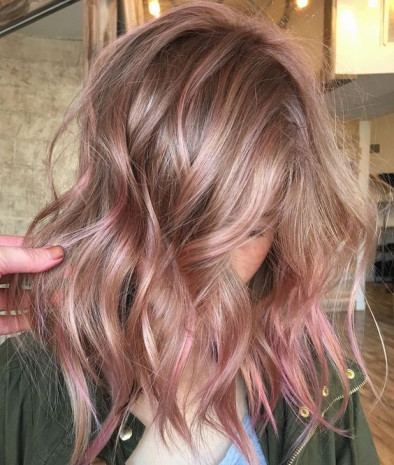
I was skeptical of this one until my friend tried it on her lob at a work friendly salon in Chicago. Soft pink starts at the ends and blends down into a grounded chocolate base, so the overall effect reads as playful rather than “I dyed my whole head cotton candy.” It’s more office appropriate than it sounds because the dark base is doing the heavy lifting visually. Pastel pigment fades quickly on porous or previously lightened hair, so budget for a refresh roughly every six weeks if you want it staying vibrant rather than turning a dull beige.
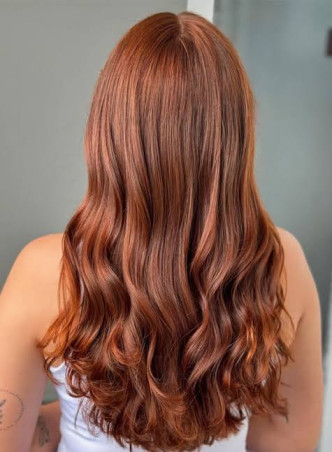
If I had to pick the single most “fall” color on this entire list, it’s this one. Reddish brown woven with copper the kind of shade that looks like it was engineered for October light specifically. It’s one of the most flattering options for warm skin tones with golden undertones. Red pigment molecules are notoriously large and sit close to the hair’s surface, which is exactly why they wash out faster than almost any other tone. Switch to a sulfate-free, color-safe shampoo the same week you leave the salon, and avoid hot showers if you want this one to actually last.
This blonde skips the cold, harsh edge entirely. It keeps enough buttery warmth that it never veers icy, and paired with full fringe bangs, it looks intentional without trying too hard. Fair skin with pink undertones tends to look best here. Expect touch-ups roughly every four to five weeks, and pair it with a bond-repair treatment (like Olaplex or K18) since lightened hair around the hairline needs extra structural support to stay healthy through winter.
This is the color I’d recommend to anyone nervous about committing to something dramatic. Medium brown roots ease into warm, toasted-almond ends basically what your hair would look like after a real summer outdoors, except it holds up just as well in December. The grow-out is forgiving enough to stretch salon visits, and a gloss treatment every couple of months keeps the tone from turning muddy.
Bright ginger is having a real moment, and honestly it makes sense everything else gets muted in winter, so a pop of warm orange feels like a small rebellion against the season. It’s especially striking against fair skin with freckles. If you’ve got natural curls or waves, different curl patterns catch and bend the orange tones in a way straight hair simply doesn’t replicate, giving the color more visual movement day to day.
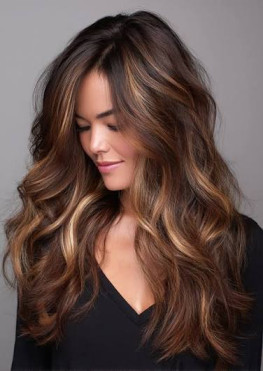
This is the “I have my life together” brunette. Warm toffee sits as the base with delicate caramel woven through finely enough that it never screams “highlights” it just looks expensive. It flatters nearly every skin tone, which is genuinely rare for a two-tone color, and because the pieces are so fine, regrowth stays a non-issue for months at a time.
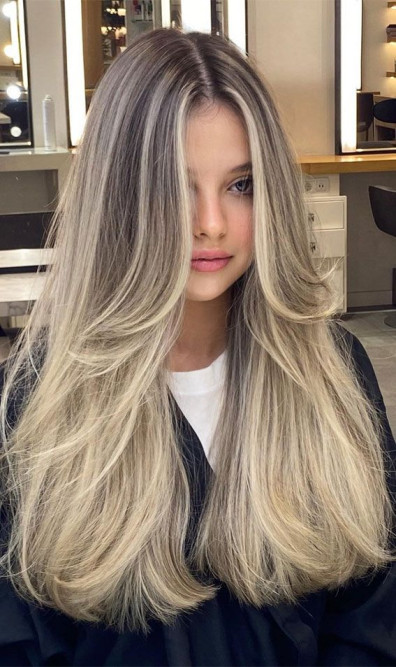
Champagne blonde threads the needle between warm and cool, so it avoids the starkness of platinum while keeping that shimmery, almost metallic quality. It photographs beautifully under indoor lighting specifically, which is part of why it trends every winter. The tradeoff is upkeep: keep purple shampoo in rotation weekly, or brassiness and yellow undertones will creep back in within a few weeks.
I’ll be honest about my own platinum experiment: it was gorgeous for about ten days and then became a part time job. This color is stunning against dark winter coats and scarves nearly white, incredibly reflective but it demands root touch-ups every three to four weeks plus regular protein treatments to keep hair from turning brittle. Go in with realistic expectations about upkeep and you’ll love it. Skip that planning and you’ll likely regret it by February, when the regrowth line becomes impossible to ignore.
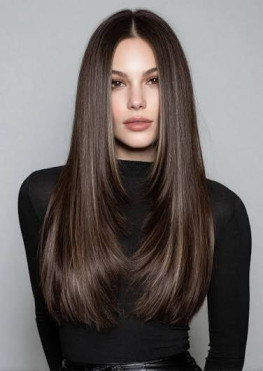
Want elegant and low-effort at the same time? This is probably your answer. It’s a medium-dark brunette with highlights only a shade or two lighter than the base, creating dimension without any harsh lines. It suits nearly every age group and professional setting, and because the highlights blend so seamlessly, regrowth stays barely noticeable for months.
This has become popular with women who are starting to embrace natural gray but want it to look intentional rather than like they’ve simply stopped coloring their hair. Cool ash and silvery ribbons run through a deep brown base, mimicking how light moves through water. A blue or purple toning shampoo, used weekly, keeps those cool tones from turning brassy between salon visits.
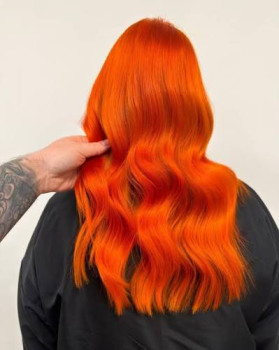
For anyone who wants their hair to double as a personality trait, tangerine delivers. It’s brighter and more playful than a traditional copper, and it genuinely brightens up the grayest winter days when everything else outside is muted. Orange pigment fades fast on all hair types, so color-depositing conditioners need to become a weekly habit, not an occasional treat, if you want to hold onto the vibrancy.
This is the quiet luxury blonde. Grey green undertones give it a smoky, sophisticated look inspired more by overcast winter skies than beach vacations. It suits cool skin tones especially well and pairs beautifully with curtain bangs if you’re due for a cut anyway the softness of the fringe balances the coolness of the tone.
Rich red mixed with golden warmth, this shade has an almost metallic shine that catches light in a way flat, single-process colors can’t replicate. It’s a classic for a reason copper has stayed in rotation every fall for over a decade. A gloss treatment every six weeks keeps those reflections looking fresh instead of dull and orange-leaning.
Sometimes the boldest move is going almost black. This near-black espresso with cool, smoky undertones is less about highlights and more about pure, glossy shine. If your hair is naturally healthy, or you’re willing to invest in getting it there with regular treatments, this color rewards you every time it catches light. It’s also one of the lowest-maintenance options here, since there’s no lightened regrowth to manage.
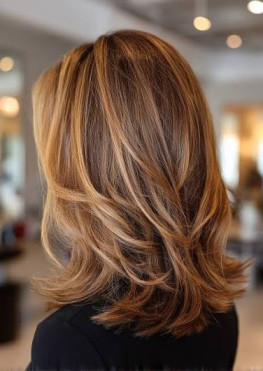
If you liked your summer balayage but want it to feel more seasonally appropriate, this softens it into golden honey ribbons through a medium brown base. It’s warm without looking like you just got back from vacation. Most people only need to visit the salon every three to four months for this one, making it one of the best options on this entire list for anyone with a packed schedule.
Not every color needs a specific named shade. This is really about embracing your natural brown whatever variation of chestnut, mocha, or chocolate that happens to be and enhancing it rather than fighting it with heavy processing. It’s the lowest effort option on this whole list, it’s kind to your hair’s health, and it never looks dated no matter what’s trending.
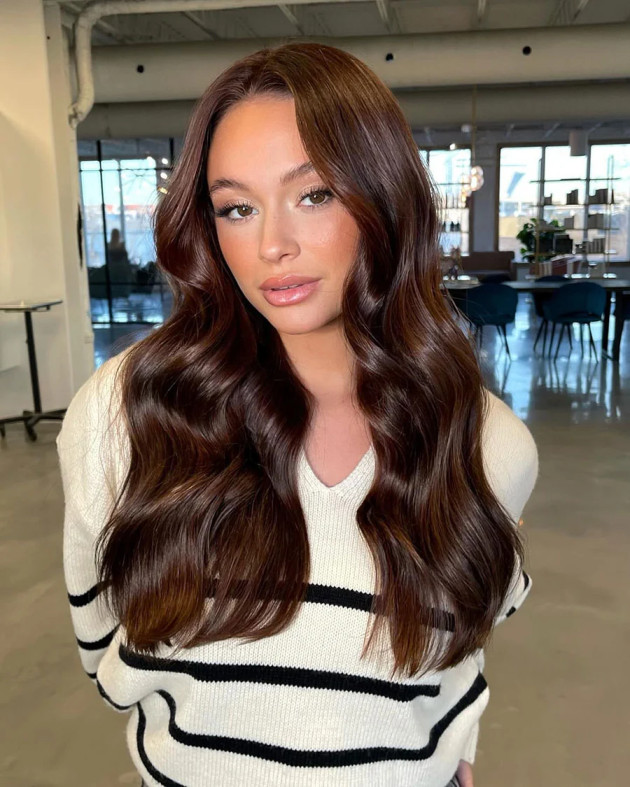
This is all about shine over dimension. A medium dark brown less concerned with highlights and more focused on making hair look thick, glossy, and healthy from root to end. Monthly gloss treatments keep it looking rich, and because there’s minimal lightening involved, it’s about as low maintenance as color gets while still looking deliberately styled.
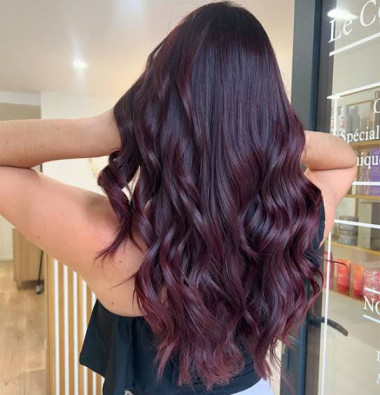
This is my personal favorite on the list, and the one I’m currently wearing as I write this. Burgundy, violet, and dark red are layered together so the color shifts depending on the light sometimes crimson, sometimes plum, occasionally near black indoors. It feels festive without being over the top, which makes it work equally well for holiday parties and an ordinary Tuesday at the office. A red toned, color safe shampoo is non-negotiable if you want the vibrancy to last past week three.
A softer, more understated brunette with sandy blonde woven through an ash-brown base. It has that “I didn’t try very hard and somehow it looks perfect” quality that’s genuinely hard to fake with a heavier hand. Fine hair in particular tends to look full and textured with this one, since the subtle pieces create the illusion of more density.
For anyone who wants their highlights to actually be seen rather than just add quiet dimension, this pairs a deep brunette base with thick, warm blonde pieces framing the face. It reads as intentional and bold rather than simply grown-out. Thick hair holds this look particularly well since it has enough volume to showcase the contrast, and staying on top of root blending keeps everything looking deliberate rather than patchy.
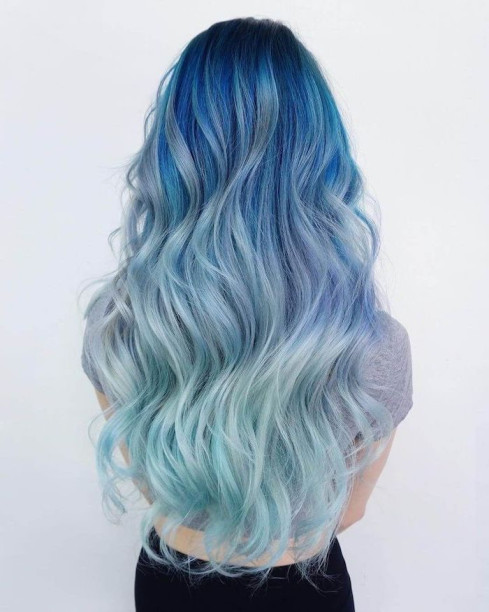
The most adventurous pick on this list, and not for the faint of heart. Deep teal roots fade into icy blue ends, giving off a frozen lake kind of feeling that nothing else on this list comes close to. It requires real commitment blue pigment is notoriously unstable and fades faster than almost any other tone, even faster than red but if you’ve been waiting for an exuse to try a fantasy color, winter’s low sun exposure is genuinely the best season to attempt it.
Taking Care of Color-Treated Hair When It’s Cold Out:
Whatever shade you land on, winter weather is genuinely rough on colored hair, and a few small habits make a real difference in how long your color actually holds.
Deep condition weekly: Indoor heating dries hair out just as much as cold outdoor wind does, so a weekly mask helps offset both sources of moisture loss.
Wash with lukewarm water instead of hot: A hot shower feels amazing when it’s freezing outside, but hot water opens the hair cuticle and lets color rinse out faster than it should.
Cut back on heat styling where you can: Every pass of a flat iron or curling wand adds more stress to hair that’s already been chemically processed alternate with heatless styling methods a few times a week.
Get regular trims, every six to eight weeks if possible: so split ends don’t creep up and dull an otherwise great color.
Wear a hat or scarf on especially cold or windy days: It sounds minor, but constant exposure to dry winter air pulls moisture straight out of your strands and accelerates fading at the ends.
Common Mistakes People Make Choosing a Seasonal Color:
The biggest one, and I say this from exprience, is picking a color purely because it looked incredible on someone else’s Instagram without considering your own skin tone or your actual weekly schedule. The second most common mistake is underestimating maintenance platinum and vivid fantasy colors are stunning in photos but genuinely demanding in real life, and going in without a plan for the upkeep usually ends in frustration by month two.
A third mistake I’ve watched happen to a friend: skipping the strand test before a dramatic color change. She wanted to go from box-dyed dark brown to ash blonde in one visit, and hr colorist warned her it would take multiple sessions to lift the old pigment safely. She pushed for a single appointment anyway, and the result pulled green instead of ash because the underlying warmth hadn’t been neutralized properly. It took two corrective visits and a lot of deep conditioning to fix. A good colorist will tell you honestly if a shade is going to fight your hair’s history before you commit and it’s worth listening even when the answer isn’t what you want to hear.
A Few Questions People Always Ask Me:
What’s actually trending most this season?
Rich brunettes, deep auburn, copper, dimensional balayage, icy platinum, and deep burgundy shades are the ones showing up again and again in salons right now, according to Renata and a few other colorists I’ve talked to this fall.
Which colors need the least upkeep?
Mocha Latte, the Classic Brunette Spectrum, Velvet Midnight Espresso, and Honeyed Amber Balayage are your best bets if you want something gorgeous that doesn’t demand constant salon visits or a strict at home routine.
Can I go from blonde to brunette for winter?
Absolutely, and a lot of people do exactly that. It’s usually easier on your hair’s health too, since you’re depositing color rather than lifting it, which means less chemical stress overall.
How often should color be refreshed?
Most permanent, all-over color needs a touch up every six to eight weeks, though balayage and ombre styles can often stretch three to four months between visits since the grow out is designed to be soft.
Will any of these work if I already have gray hair coming in?
Yes Tidal Wave Ash Ribbons and Muted Ash Stone Blonde in particular are popular right now specifically because they blend naturally with silver regrowth instead of fighting it, which is part of why they’ve become go-to requests for anyone transitioning to gray on their own terms.
Final Thoughts:
At the end of the day, the best hair color for this season isn’t whatever’s trending hardest on social media it’s whatever fits your actual life. Think about your skin tone, sure, but also think honestly about how much time you’re willing to spend in a salon chair, how much upkeep you’ll actually do at home, and what your hair has already been through this year. A shade that suits both your features and your routine will always look better long-term than something you saw once and impulsively committed to.
Whatever you choose from this list, take care of it once it’s done. Good products, the right water temperature, and regular trims matter just as much as the color itself. Here’s to stepping into the colder months with hair that actually feels like it belongs to the season.
Style Nexus is written and run by Matilda. What started as a personal interest in fashion, beauty, and everyday styling grew into this site a place to share outfit ideas, beauty tips, and style inspiration with anyone looking for a bit of direction on their own look.