


I almost skipped my nail appointment this month. It had been a long week and I nearly rescheduled until my nail tech, Priya, pulled out a deep, ink-blue gel and asked if I wanted to try something other than my usual beige. I said yes before I’d even thought it through, and that one decision turned into a two-hour conversation about how differently people shop for color once August hits. Priya works about thirty appointments a week at a salon near me, and she said the same thing every year: by August, clients stop chasing the loudest neon on the wall and start asking for something that reads as a little more grown-up softer, richer, still fun, just with more depth to it.
That conversation is the reason this list exists. I tried eight shades myself over three weeks some earned a permanent spot in my rotation, one was a genuine mismatch for my skin tone, and I picked up enough small technique lessons along the way that I wish someone had handed me this list before I ever sat down in the chair. Below is what’s actually trending this August, what each color demands from you in terms of upkeep and finish, and what I’d tell a friend before she books.
Why August Nails Feel Different From June and July?
Early summer color is about impact bright corals and neon pinks you reach for the moment the weather turns warm. By August, the mood shifts. Your tan has usually reached its deepest point, your calendar has probably picked up a wedding or a last-minute trip, and there’s a pull toward color that photographs well without looking like it’s trying too hard.
A genuinely good August manicure has to clear a few bars at once: it needs to sit well against tanned skin, survive the transition into September without looking dated, and work equally well at a beach bar and in a client meeting. That’s a lot to ask of a bottle of polish. The eight shades below are the ones that actually manage it, based on what salons in my area are booking most and what held up on my own hands.
Finding Your Shade Based on Skin Tone:
Before the list this is the part that changed which colors actually worked for me, and it’s worth thirty seconds before you pick anything.
If you lean warm-toned (gold jewelry looks better on you than silver, and your veins read more green than blue), mango orange, bronze shimmer, poppy red, and creamy vanilla will gnerally look the most natural against your skin. If you’re cool-toned (silver flatters you more, veins read blue or purple), indigo, glazed pearl, and hibiscus pink tend to have the strongest payoff. If you’re neutral, like I am, Priya’s advice was simple: almost everything on this list will work, so pick based on mood rather than matching.
Nail shape matters here too, even though it gets less attention than color. Shorter, rounder shapes tend to hide regrowth lines longer and suit deeper, richer colors like indigo or bronze particularly well, sice there’s less bare nail surface to draw the eye toward the gap. Longer almond or squoval shapes show more of the color itself, which makes them a better canvas for finishes like glazed pearl or hibiscus pink, where the visual interest is in how the light hits the nail rather than in the color alone. None of this is a hard rule, but it’s worth mentioning to your nail tech if you’re choosing between two shades and can’t decide.
1. Inky Indigo:
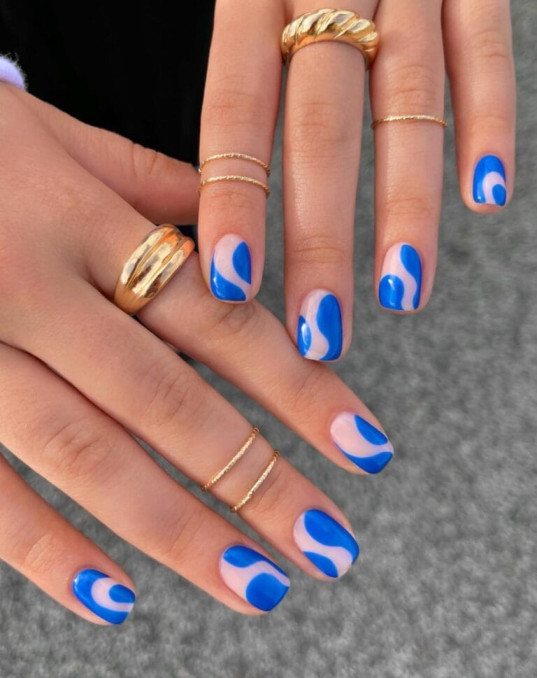
I expected this to feel too heavy for August more of a November color. Priya put it on one hand as a test and by the time she finished, I’d asked her to redo the other to match. Against tanned skin it doesn’t read as flat navy; there’s real depth to it, closer to looking into water at night than a solid block of color.
This is a finish-dependent shade: in glossy, it looks intentional and rich; in matte, it flattened out and read almost gray on me, so I’d steer away from matte here specifically. It also grows out cleanly on shorter, rounder nail shapes. I noticed more visible regrowth line on longer almond shapes after about twelve days. If you want to test the color before committing to a full set, ask for it as a single accent nail; it still reads as deliberate rther than half-finished. It pairs naturally with denim and simple silver jewelry, and a standard gel application typically runs seven to ten days before it needs a touch-up.
2. Glazed Pearl:
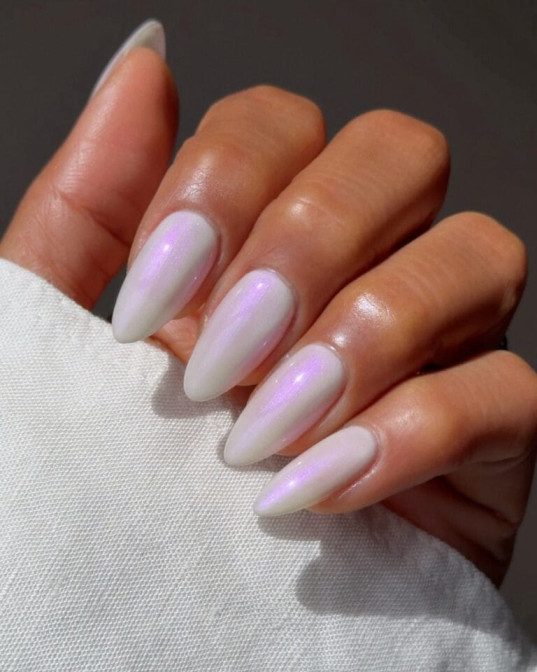
This finish has been all over my social feeds for months, and trying it in person explained why. It’s not glitter and it’s not chunky shimmer it’s a soft, almost lit-from-within glow, usually built by layering a sheer pearlescent top coat over a milky white base.
The one adjustment I’d make: skip extra nail art on top of it. I tried adding thin gold linework over a pearl base once, and it competed with the finish instead of complementing it the pearl effect is subtle enough that busy detailing just muddies it. Left plain, it reads polished and a little bit expensive, which is part of why it’s become a popular choice for wedding season specifically. It’s also fairly forgiving for beginners doing their own nails at home, since the pearl top coat hdes small application unevenness better than a flat cream polish would.
3. Mango Orange:
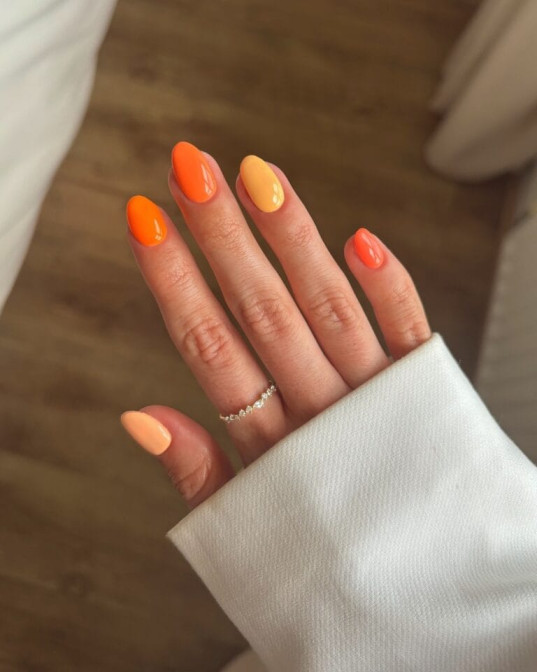
Orange nails were a hard no for me for years, mostly thanks to a neon-orange manicure that made my hands look sunburnt rather than tan. Mango is a different animal warmer and more golden, with none of that stark, artificial edge.
Worn to a backyard gathering, it got more compliments than almost anything else I tried this summer, which tells you something about how well it photographs outdoors. The styling note here is about restraint elsewhere: stacked gold braelets, hoops, and a saturated orange polish all competing at once reads as busy rather than put-together. Keep other accessories minimal and let the color do the work. On the maintenance side, cream-finish oranges like this one tend to show tip wear faster than shimmer or pearl finishes, so it’s a better pick if you’re due for a fill within the week rather than one you plan to stretch to three.
4. Creamy Vanilla Nude:
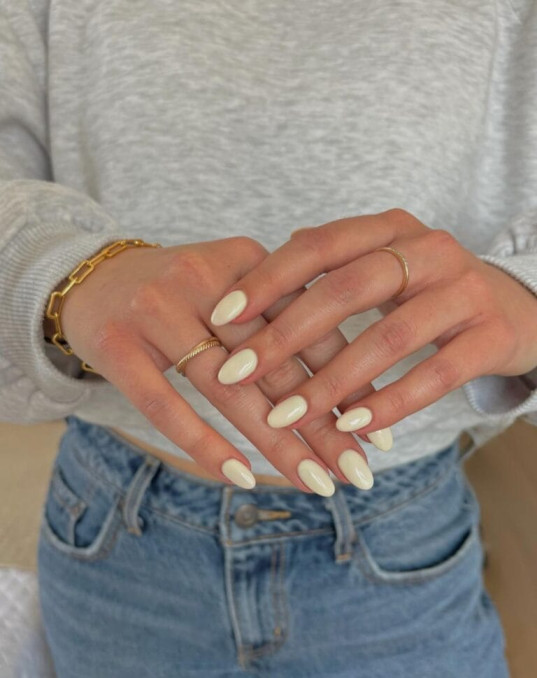
This is the shade I kept returning to, mostly because it’s genuinely versatile office-appropriate, beach-appropriate, wedding-appropriate, all without adjustment. What actually surprised me was the regrowth: most of my other colors show an obvious line within ten days, but vanilla nude fades gradually enough that it still looked intentional at the three-week mark.
Because it’s a light, neutral tone, it shows dry cuticles more readily than a bold color would, so daily cuticle oil isn’t optional here the way it is with darker shades it’s the dfference between the manicure looking finished or slightly unkempt. If you’re someone who doesn’t get to the salon often, this is the lowest-maintenance option on the list by a clear margin, and it’s an easy one to do accurately at home since minor brush-stroke imperfections barely show.
5. Bright Poppy Red:
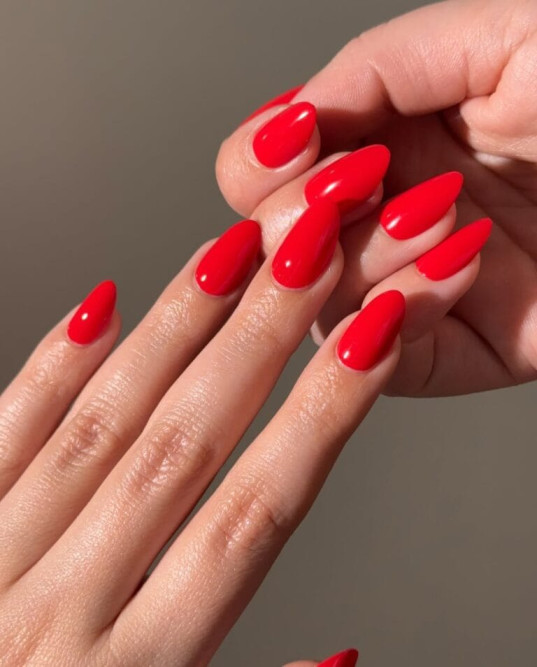
Red intimidates a lot of people, myself included until recently. Poppy red specifically warm-toned rather than the cooler, blue-based cherry red I used to default to turned out to be far easier to wear than I expected, in part because it doesn’t clash with a summer tan the way cooler reds sometimes can.
It also photographs unusually well; at a friend’s dinner, every picture with my hands in frame looked noticeably sharper and more finished than with my usual neutral. If a full red set feels like too big a jump, ask for it as a French tip over a sheer nude base that’s a genuinely good on-ramp rather than a compromise, and it’s what I wore for two weeks before committing to a solid color. Reds in this warm family also tend to show chipping at the tip edge first, so a reinforced or wrapped tip application is worth requesting if you want it to last past the ten-day mark.
6. Chartreuse:
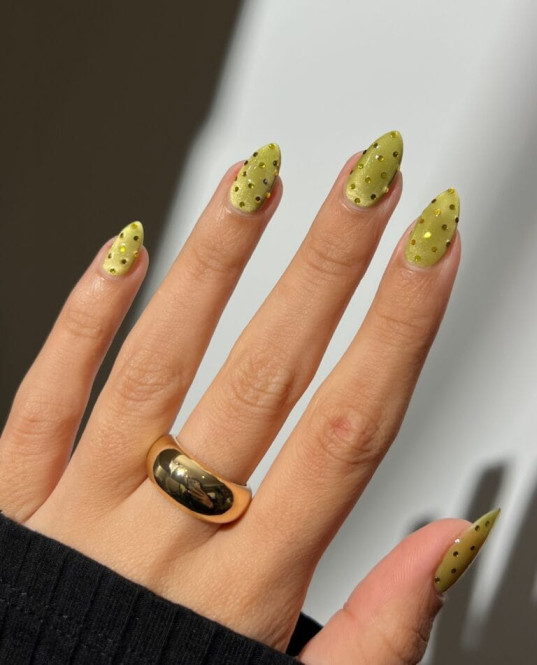
I’m the least confident recommending this one across the board. It’s a bold yellow-green, and there’s no subtle way to wear it. On me, it split opinion sharply one friend loved it, my mother compared it to a highlighter. It reads as more of a fashion-editorial pick than an everyday office color, and it’s the shade on this list most dependent on undertone: it looked genuinely striking on a cool-toned friend and only okay on my neutral skin.
If you’re someone who treats nail color as a small, low-stakes way to experiment, this is worth one try. If you’d rather not risk a color that splits opnion, this is the easiest one to skip without missing much nothing about its wear or upkeep is unusual, it’s purely a matter of whether the shade suits you.
7. Hibiscus Pink:
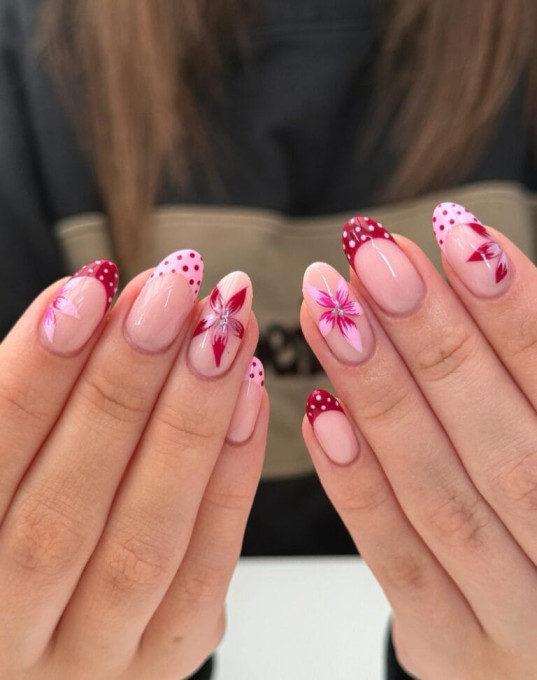
My favorite discovery on this list. It isn’t the pale pastel pink most people picture it has enough warmth and red mixed in that it reads closer to a tropical flower than a typical “pink” polish. Worn on a beach trip, it matched the setting in a way that felt more accidental than styled, which is usually the sign of a color that’s actually working.
Glossy is essential here; a matte test nail flattened out the warmth and made it look duller than the glossy version by a noticeable margin. For a small upgrade over a plain manicure, ak about fine floral detailing along the tip instead of a standard French line it takes only a few extra minutes in the chair and makes the set feel more finished. It holds color well on both short and long nail shapes, which isn’t true of every shade on this list.
8. Bronze Shimmer:
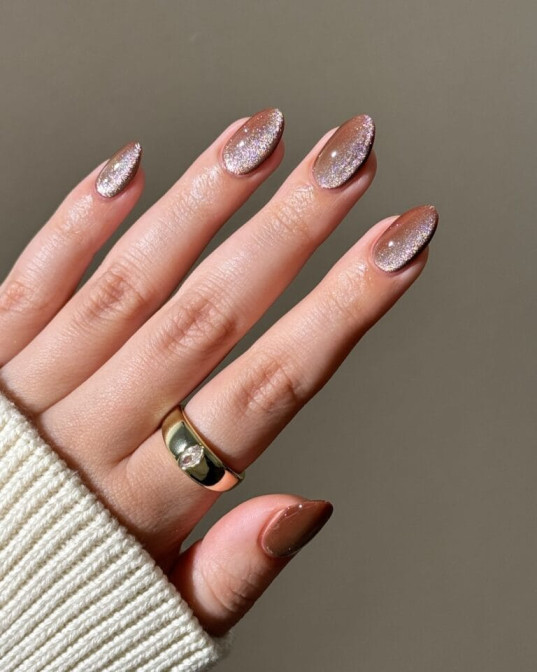
Save this one for the back half of summer, when your tan has fully set in it’s genuinely designed to be worn against sun-warmed skin rather than pale skin, where it can read a little flat. Priya mentioned this before I even asked, which tells you it’s a common enough observation among nail techs that it’s worth taking seriously.
It has a warmth that silver chrome doesn’t, and it eases into fall without looking out of season, which makes it one of the better shades to keep wearing past Labor Day. For more visual interest, ask about a velvet or magnetic-effect bronze finish — mine had a subtle shifting quality depending on the light, and it read as noticeably more expensive than a standard shimmer at a similar price point. Because of the metallic pigment, it’s also one of the more chip-resistant finishes on this list, often lasting close to two weeks with a gel top coat.
Moving From Summer Into Fall Without an Abrupt Switch:
You don’t need to retire every bright color the moment September starts. A few small adjustments ease the transition instead of forcing a hard reset.
Lean into warm neutrals like vanilla nude or bronze shimmer first, since both hold up in either season without looking out of place. Keep your top coat glossy even as your color choices get deeper shne is what keeps a darker polish feeling fresh instead of heavy. If you want to hold onto some brightness a little longer, pair a bold shade like hibiscus pink on most nails with a deeper accent nail in indigo; it’s a small styling choice that bridges both seasons without committing fully to either.
Common Mistakes I’d Avoid:
A few lessons that came from trial and error rather than advice. Skipping a glossy top coat on richer shades like indigo or bronze it’s the single biggest factor in whether these colors look intentional or flat. Layering nail art on top of a shimmer or pearl finish, when the finish itself is already doing the visual work and extra detail just competes with it. Choosing a color purely because it’s trending rather than checking it against your undertone — chartreuse was the clearest example of this for me; it depends heavily on the person. And skipping cuticle oil with lighter, neutral shades specifically, since dry skin shows far more against pale polish than against a bold one.
A Few Honest Questions People Keep Asking Me:
Which color gets requested most right now?
According to Priya, glazed pearl and vanilla nude are still the most-booked shades this season, with indigo emerging as a surprise favorite this year in particular.
What looks best against a tan?
Bronze shimmer, mango orange, and hibiscus pink all read especially well against tanned skin. Indigo works differently it creates contrast rather than blending in, which is its own kind of flattering.
Is August too early or too late for a dark color like indigo?
Neither. It sits comfortably between the brightness of early summer and the deeper tones most people move toward once fall actually arrives, which is exactly why it’s trending now.
Matte or glossy for these shades specifically? Glossy, almost without exception. Every color on this list relies on shine to show its full depth matte consistently flattened the richer tones when I tested it.
Final Thoughts:
I expected to walk away from this with a few new polish names to try. Instead, I rethought how I pick color altogether the idea that you have to choose between bright summer energy and something more refined turned out to be a false choice. This year, several of these shades manage both at once.
If you want one safe, low-effort recommendation, start with creamy vanilla nude. If you’re ready for something a little less predictable, inky indigo is worth the leap. Either way, a glossy top coat and consistent cuticle oil will take almost any shade on this list from decent to genuinely well done. August is a forgiving month to experiment with color. If a shade doesn’t work, it grows out in a couple of weeks, and there are seven more on this list to try next.