

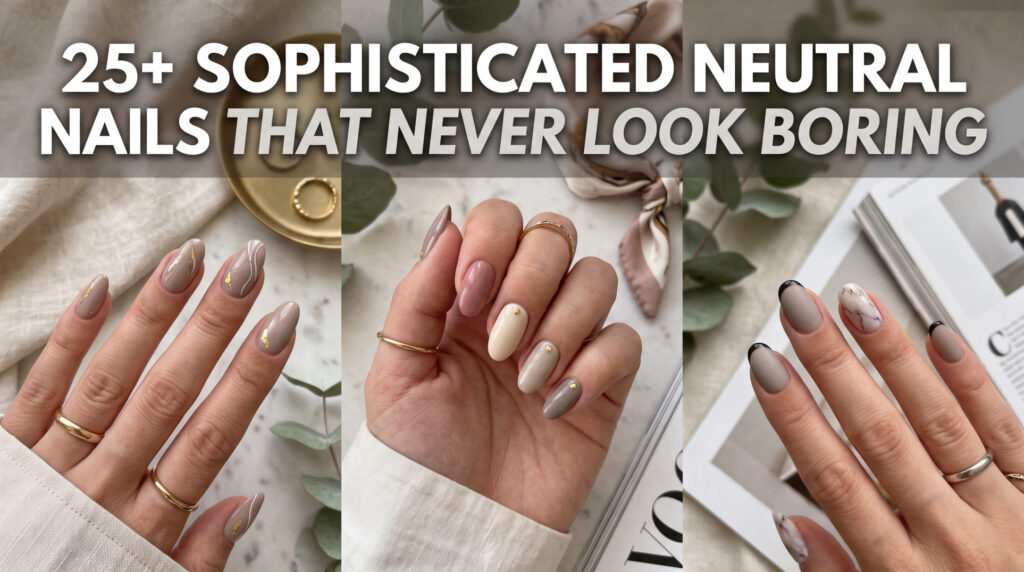
I used to think neutral nails were the “safe but boring” choice. Every time I sat down in the salon chair at Bellacures on 3rd Street, I’d flip through the color wall and land on some loud red or a bright coral just because I was scared beige would look like I forgot to paint my nails at all.
Then in April 2024, a friend dragged me to her wedding trial appointment and talked me into a milky nude French set to match hers $65 for the set, which felt steep at the time for “basically no color.” I remember staring at my hands afterward thinking: wait, why does this look more expensive than every bold color I’ve ever worn?
That was over two years ago. Since then I’ve gone through around thirty different neutral shades across OPI, Essie, and a couple of gel systems, tried them on every nail shape I own, ruined at least two manicures learning what not to do (more on the marble disaster later), and finally figured out why neutrals are the one nail trend that never actually goes out of style. If you’ve been on the fence about them, or you tried one nude polish once and thought “meh,” there’s a lot more range here than people give it credit for and a few real mistakes worth avoiding before you spend the money.
Why Neutral Nails Actually Work (And Why I Was Wrong About Them)?
Here’s what nobody told me at first: neutral doesn’t mean one shade of beige. It’s an entire family of colors milky whites, dusty rose, deep caramel, taupe, terracotta and each one behaves differently depending on your skin tone, the finish you pick, and even your nail shape. My nail tech, who’s been doing manicures for close to twelve years, has a running joke that “neutral” is the category people underestimate the most and then get obsessed with once they actually try it properly.
What sold me for good was the low maintenance. With bold polish, the second it grows out even a millimeter, it’s obvious I’ve had to touch up red polish after four days. With neutrals, especially anything in the milky or nude family, you can go two to three weeks before regrowth is really noticeable, because the color blends into your natural nail bed instead of contrasting against it. That alone has saved me from rushed salon visits before work trips more times than I can count.
There’s also a cost argument nobody mentions. A basic neutral polish manicure runs $25–$40 at most salons, while nail art or elaborate French designs with foil or 3D details can run $60–$90. Gel neutral polish typically adds $10–$15 to the base price but roughly doubles how long it lasts (2–3 weeks versus 5–7 days for regular polish). If you’re someone who wants your manicure to survive a full pay period without chipping, gel is worth the upcharge specifically for neutral shades, because chips show up faster against a sheer base than a solid bold one.
They also just go with everything. I’ve worn the same soft caramel manicure with jeans and a t-shirt, then to my cousin’s engagement dinner two days later, without feeling like I needed a touch-up in between.
Finding Your Shade Based on Undertone (This Is Where I Went Wrong The First Time):
My first neutral manicure was a flat, chalky beige OPI’s “Berlin There Done That” that made my hands look almost gray against my skin. I have a warm undertone and picked a shade formulated for cooler skin. Lesson learned the expensive way, since I ended up removing it after two days.
If you lean warm (gold or olive undertones), lok for peachy nude, warm beige, caramel, terracotta, or creamy ivory. These play well with golden skin instead of washing it out. Essie’s “Ballet Slippers” and OPI’s “Coconuts Over OPI” both lean warm and are widely available.
If you lean cool (pink or blue undertones), dusty rose, taupe, soft blush, milky pink, and cool beige tend to look most natural. Essie’s “Mademoiselle” is a reliable cool-toned starting point. If you’re neutral or unsure, you’re honestly lucky, because most of these shades will work for you. I fall into this category now that I’ve fgured it out, which is exactly why I own more nude polishes than I’d like to admit.
If you’re not sure which undertone you have, check the veins on your wrist in natural daylight, not under indoor lighting, which distorts color. Blueish veins usually mean cool undertones; greenish veins usually mean warm. It’s not a lab grade test, but it’s a solid starting point before you spend money on a shade that might not work and it’s exactly what saved me the second time around.
The Manicures I’ve Actually Tried (And What I Learned From Each)
I’m grouping these by finish and technique rather than listing near-identical shades separately, since a few of my original favorites were honestly too similar to count as distinct looks.
1. Milky Nude French:
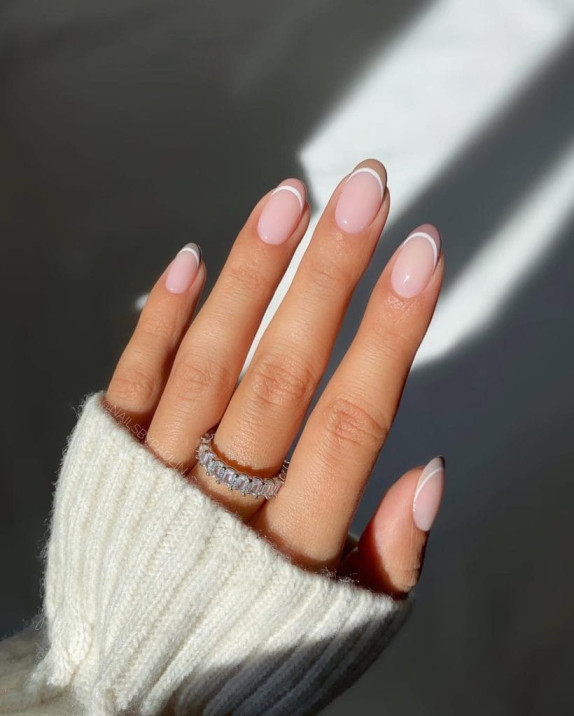
My gateway manicure, the one from my friend’s wedding trial. A sheer milky nude base with a barely-there white tip. It photographed beautifully and lasted almost three weeks in gel because the color is so forgiving on regrowth. Best for weddings, office settings, or any time you want your hands to look put together without trying. Ask for OPI’s “Bubble Bath” as the base if your salon carries it.
2. Cocoa Dot Mix:
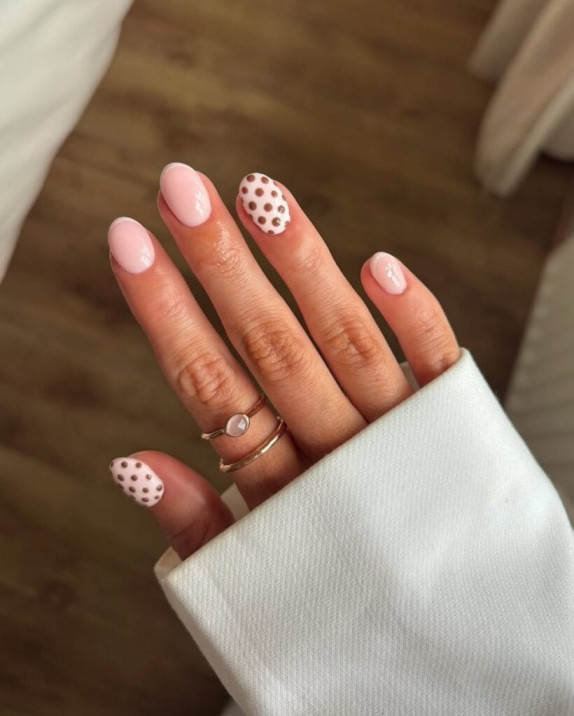
I did this before a fall trip to Vermont and loved that it wasn’t a full nail-art commitment. Two accent nails with tiny brown dots over a nude base, the rest kept as simple French tips. Costs about $10 more than a plain manicure for the detail work.
3. Blush Marble & Gold Leaf:
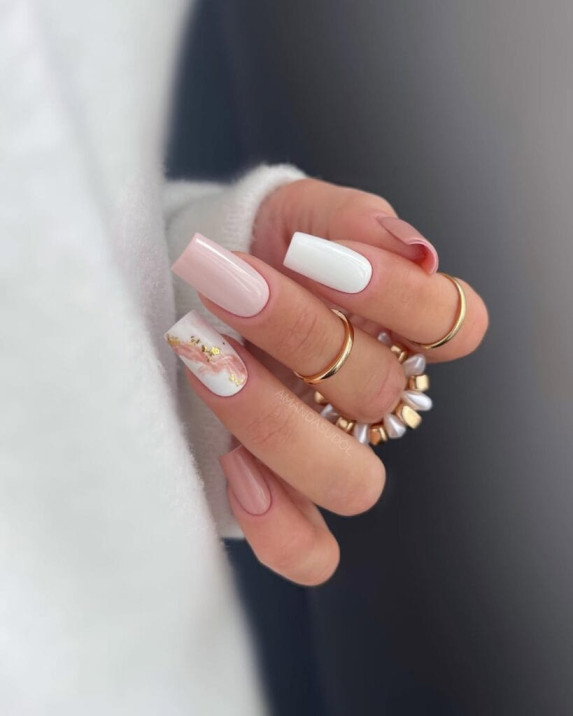
The one I’d tell brides to try. It takes longer at the salon, roughly 20 extra minutes, because the marble effect can’t be rushed, but it genuinely looks like jewelry on your hands. My first attempt at doing this myself at home was the “ruined manicure” I mentioned earlier the marble effect needs a steady, practiced hand, so I’d leave this one to a professional.
4. Opal Dot Shimmer:
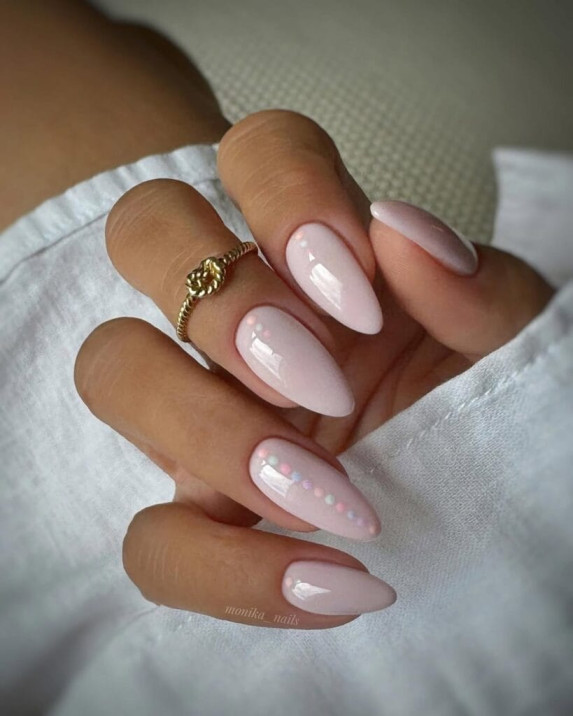
I did this myself at home with a dotting tool and a sheer pink base, total cost under $15 in supplies. It’s forgiving if your dots aren’t perfectly even; the shimmer distracts from small mistakes, which made it a genuinely good beginner nail-art project.
5. Glossy Nude Pink:
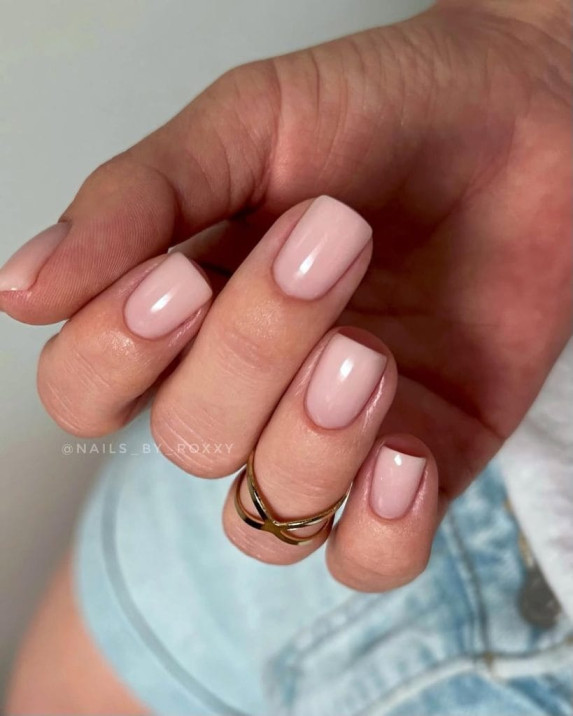
My go-to when I don’t have time for aything fancy. One coat of nude pink, a good glossy top coat, done in under ten minutes at home.
6. Vanilla Gold Accent:
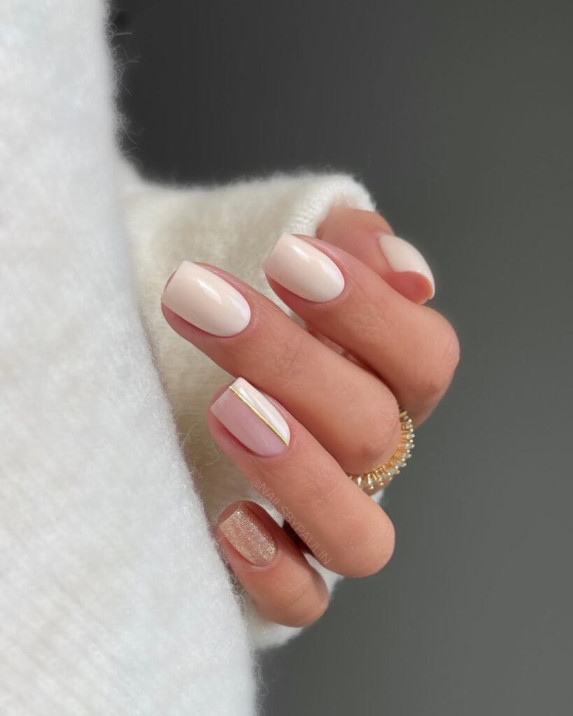
Vanilla nude with thin gold lines along the cuticle. I wore this to a holiday party last December and got more compliments than any glitter polish I’ve tried.
7. Peachy Nude Gloss:
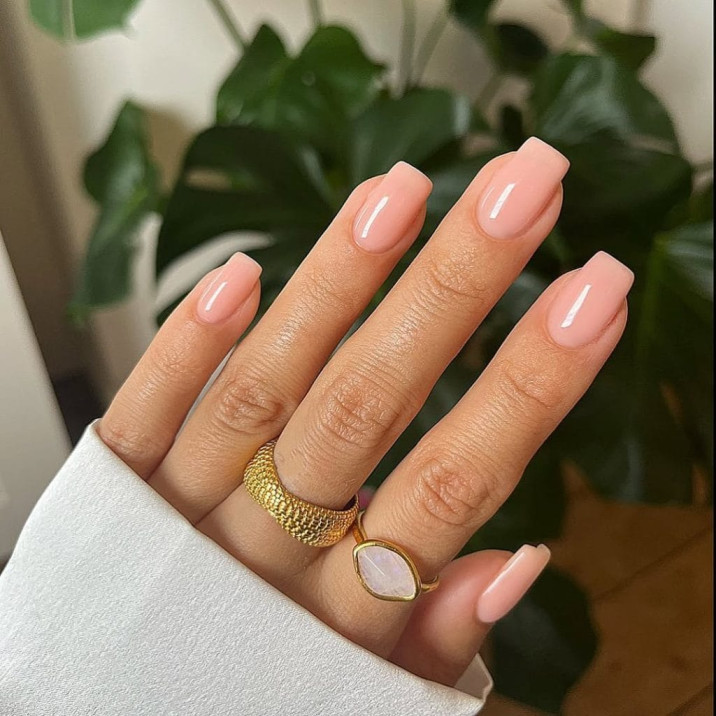
Warmer than beige and one of the most flattering shades I’ve tried on tanned summer skin. It made my hands look healthier, if that makes sense less flat than a straight beige.
8. Dusty Rose Almond:
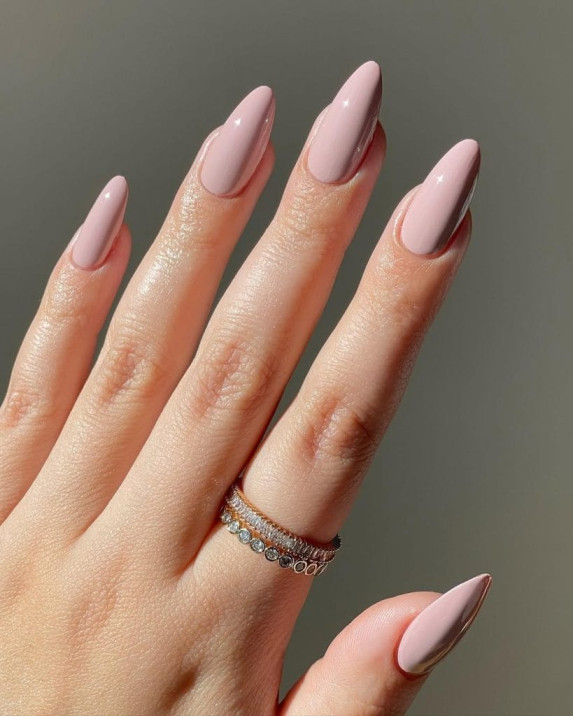
This surprised me. I expected it to look too soft or girlish, but on an almond shape it read more sophisticated than sweet. Worth trying in matte too it’s a completely different, more grown-up vibe on the same shade.
9. Nude Marble Effect:
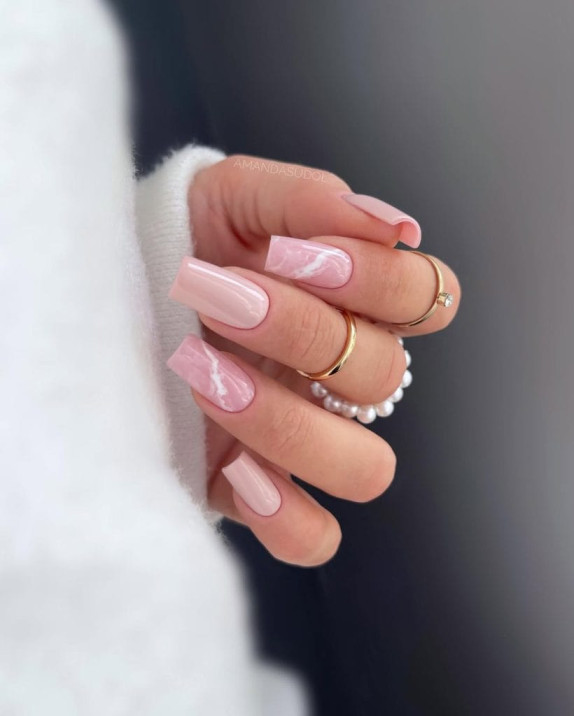
Every nail comes out slightly different because of how the marbling settles in the water or under the brush, which I actually love. No two hands look exactly alike, which makes it feel custom rather than templated.
10. Sheer Nude Oval:
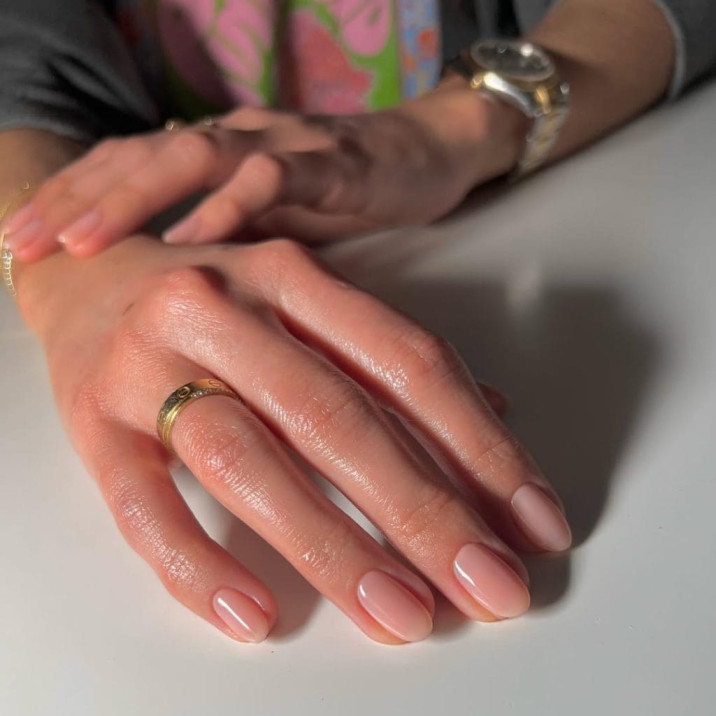
A classic French tip with a whisper-thin gold line under the white. Feels expensive without being loud, and it’s a small enough detail that most nail techs can add it for $5–$10 over a standard French set.
11. French & Gold Glow:
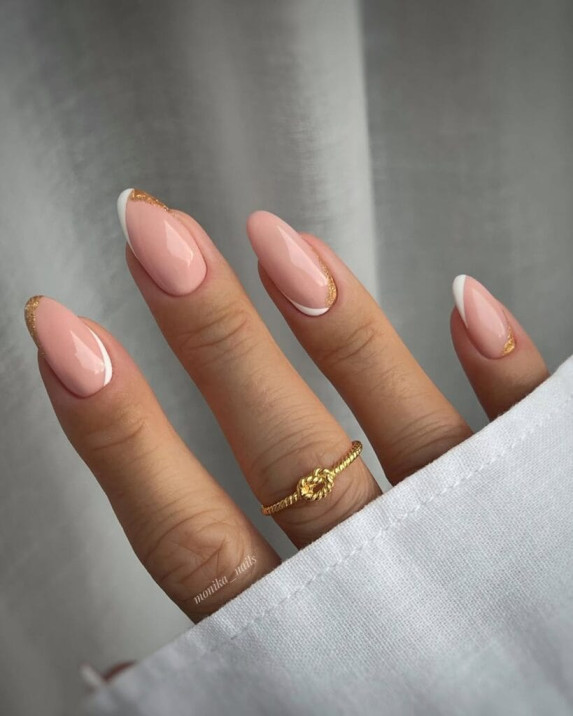
If you’ve never tried squoval (square with softened corners), this is a great introduction to the shape. Practical if you type a lot or work with your hands often, since square corners are less prone to snagging than a pointed almond shape.
12. Nude Pink Squovals:
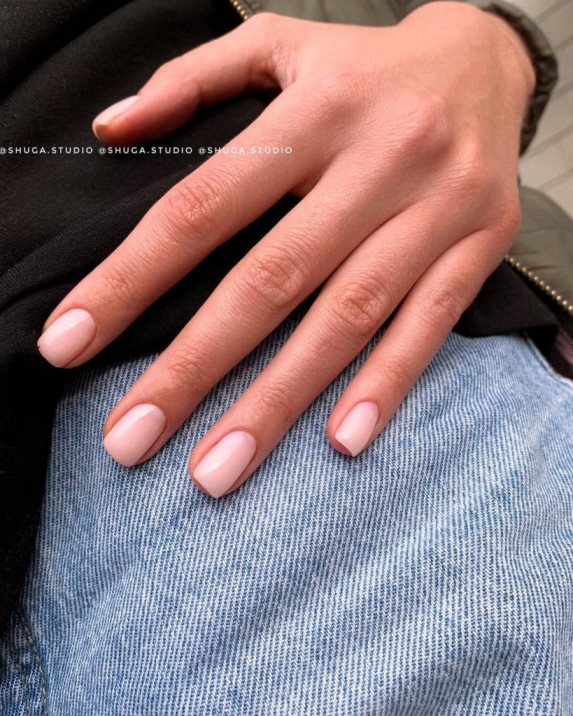
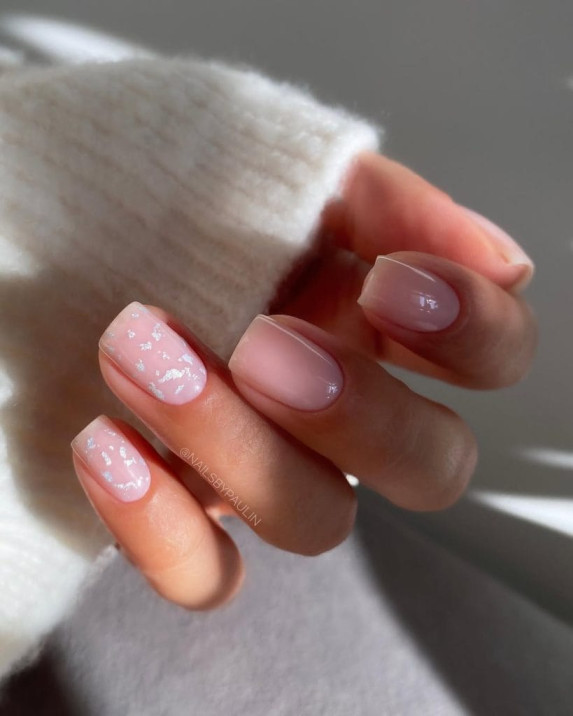
Instead of one shade across all ten nails, mix two or three neutrals in the same family. I did mauve, blush, and a speckled white accent nail, and it read as intentional rather than mismatched, as long as you stay within one undertone family — this is the mistake that trips people up, mixing warm and cool neutrals on the same hand.
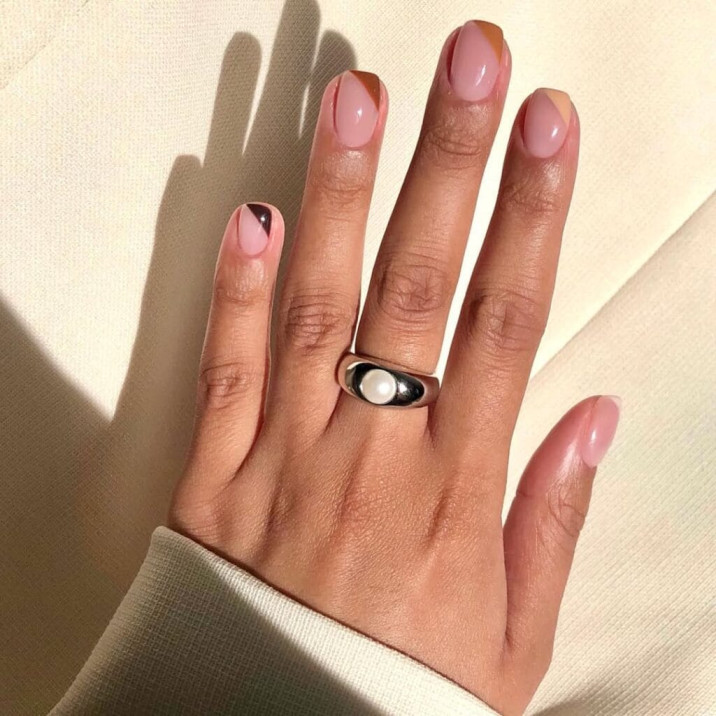
13. Neutral Mix:
A geometric twist on the French tip using angular cocoa-brown lines instead of the usual curve. Felt very editorial without being hard to wear day to day, and held up well over two weeks in gel.
14. Classic Milky White:
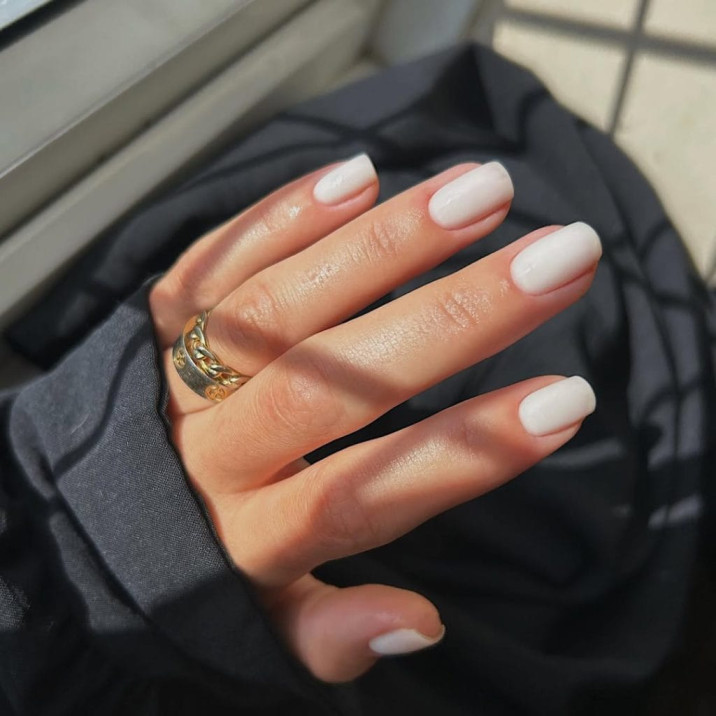
My personal favorite for October. Warm, earthy, and pairs with basically every sweater I own — genuinely the shade I get compliments on the most in fall.
15. Abstract Cocoa French:
Instead of blending shades within one nail, each nail is a slightly different neutral so the whole hand fades gradually. Looks harder than it is; most nail techs I’ve asked can do this in a standard appointment slot without extra charge.
16. Terracotta Almond:
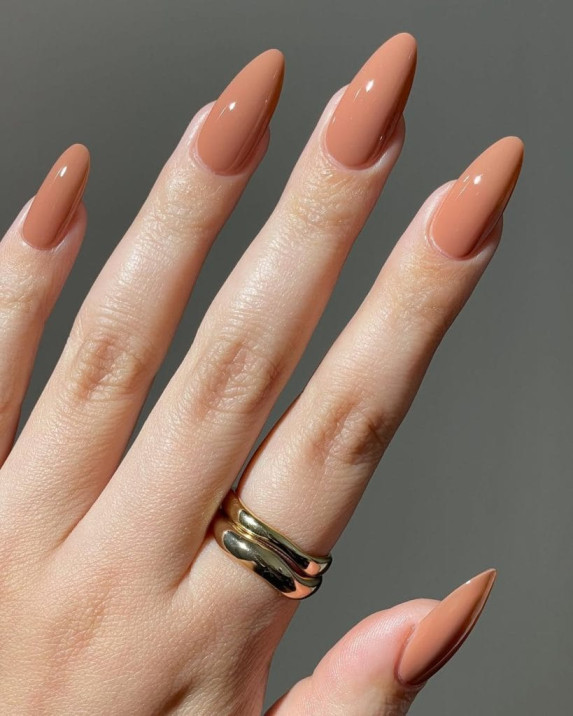
A gradient from nude at the cuticle to white at the tip, done within each individual nail. This is genuinely one of the most requested bridal looks at my salon, and for good reason — it visually elongates the fingers.
17. Neutral Ombre Mix:
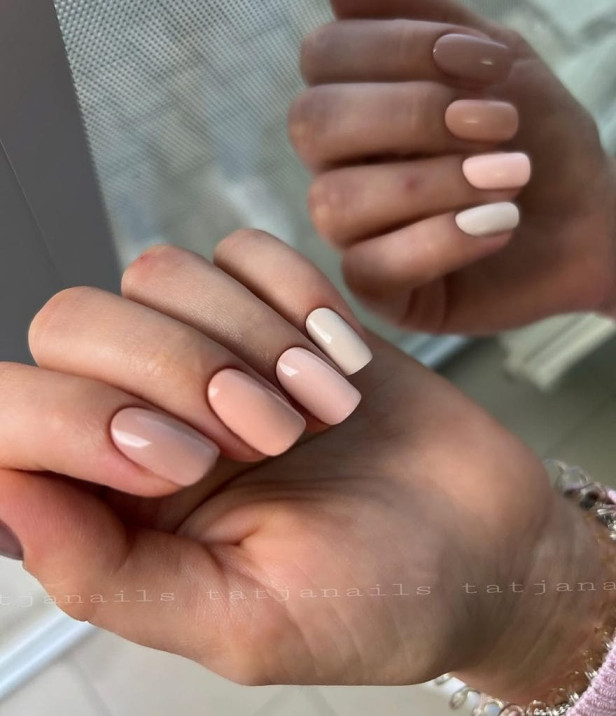
Rich brown swirls over a milky base. My nail tech’s advice, which I now follow every time: limit the swirl detail to two accent nails max, or it starts to look busy instead of intentional.
18. Nude to White Ombré:
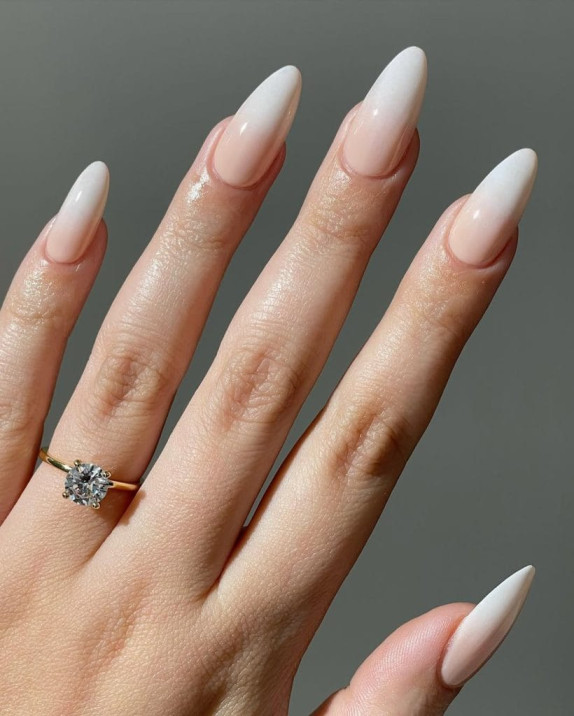
The safest option if you genuinely can’t decide. It’s clse to impossible to mess up, even doing it yourself, and it’s the one I recommend to friends trying neutral nails for the very first time.
19. Coffee Brown with Swirl Art:
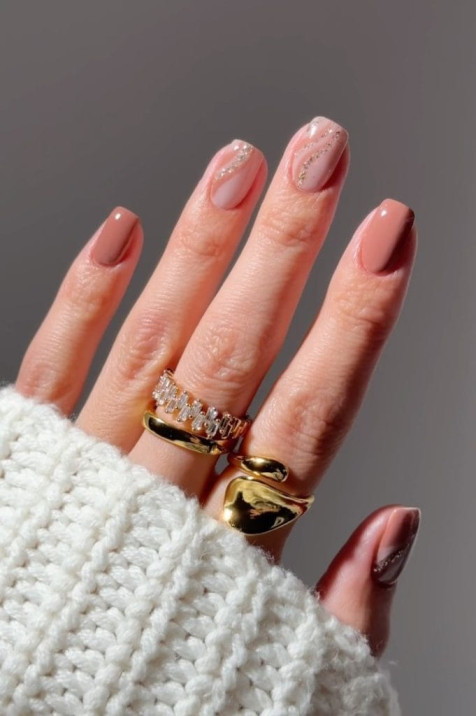
Tiny black or brown speckles over nude tips. Playful without crossing into “loud,” and a good middle ground if plain neutral feels like too little.
20. Milky Nude:
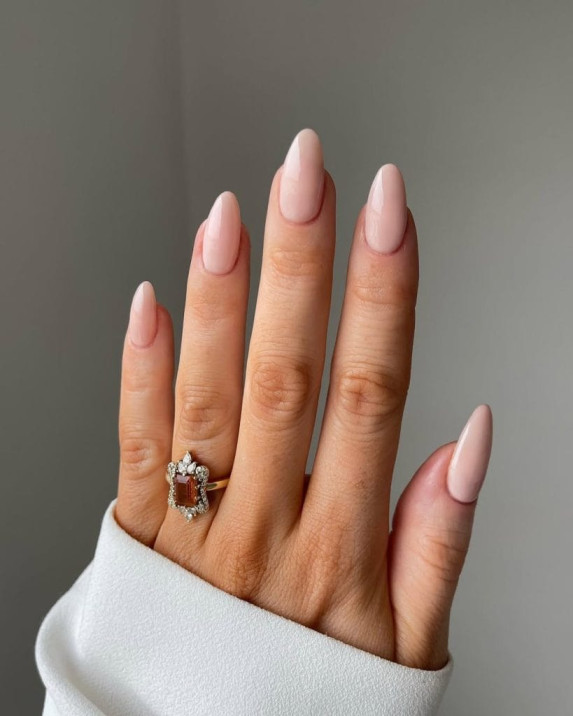
Glass-like, barely-there polish. This is the one people ask “did you get your nails done?” about, because it looks so natural — genuinely the closest thing to a “no-makeup makeup” look for nails.
Common Mistakes I Made (So You Don’t Have To):
Skipping the undertone check: As I mentioned, my first attempt was a flat, wrong-toned beige that I removed within two days. Always test a shade against your wrist in daylight before committing, not under the salon’s overhead lighting.
Going too matte on pale nudes: Matte can look chalky and dry on very light shades I tried a matte milky white once and it read as unfinished rather than sophisticated. I’ve learned to save matte finishes for richer tones like caramel or terracotta, where the flat finish actually reads as intentional.
Skipping a ridge-filling base coat: Neutral polish is sheer enough that any ridges or discoloration in your natural nail show through. A ridge-filling base coat (I use OPI’s Ridge Filler) made a visible difference the very first time I tried it.
Overdoing the nail art: The appeal of a neutral manicure is restraint. On the marble-and-gold-foil set I tried at home, I added marble, dots, and gold foil all on the same set, and it looked cluttered instead of elegant. Pick one accent detail, not three this is the single most common mistake I see on other people too.
Ignoring nail shape: The same nude color looks completely different on a square nail versus an almond one dusty rose read “sweet” on my round nails but “sophisticated” on almond. If you’re unsure what shape suits you, ask your nail tech; they see hundreds of hands a week and can usually tell within seconds.
Making It Last:
A few habits that actually extend the life of a neutral manicure, based on two years of trial and error:
- Cuticle oil daily: I keep a small bottle in my bag and use it almost like hand cream this alone made my gel manicures look fresh for an extra three or four days longer than when I skipped it.
- Gloves for dishes and cleaning: Hot water and dish soap are brutal on regular polish specifically; gel holds up noticeably better against this than standard lacquer.
- Reapply top coat every few days: if you’re doing your nails yourself at home rather than getting gel.
- Keep nails filed and shaped: Small snags turn into bigger breaks fast, especially on longer almond or oval shapes.
- Moisturize your hands generally: Dry cuticles make even a fresh manicure look tired, no matter how good the polish job is.
Neutral Nails Through the Seasons:
I’ve worn some version of neutral nails in every season for the past two years, and here’s roughly how I’d break it down:
Spring calls for blush pinks and sheer nudes light enough to feel fresh without competing with floral prints. Summer suits peachy tones and creamy whites, which photograph well against a tan. Fall is where caramel, cocoa, and terracotta shades really shine this is consistently my most-complimented season for neutral nails. Winter works surprisingly well with milky pinks and taupes, especially with a glossy finish for holiday events where you want your hands to catch the light without wearing an obvious color.
A Few Questions People Actually Ask Me:
What’s the most universally flattering neutral shade?
Milky nude or sheer pink. I’ve recommended these to friends with every undertone and skin tone, and it’s rarely wrong.
Can you do neutral nails on short nails?
Yes, honestly, they often look cleaner on shorter nails than bold colors do, since there’s less color to visually shorten the nail.
Are they appropriate for weddings?
It’s basically the default bridal choice at this point, and the nude-to-white ombré (#16) is the single most requested version at my salon.
Glossy or matte?
Glossy tends to look more expensive. Matte looks more fashion-forward and works best on deeper neutral shades. It depends on the vibe you’re going for.
How much does a neutral manicure typically cost?
A basic version runs $25–$40; gel adds $10–$15 but roughly doubles the wear time; nail art details like marble or foil add $15–$30 depending on complexity.
Gel or regular polish for neutrals?
Gel, if you can afford the upcharge. Because neutral shades are sheer, chips and wear show up faster than on bold colors, and gel’s extra durability matters more here than it does with a solid red or black.
Final Thoughts:
I wet from thinking neutral nails were the boring backup option to being the person who now owns more nude polishes than actual colors. What changed my mind wasn’t one single manicure — it was realizing how much range exists inside that “neutral” label once you actually start experimenting with finishes, undertones, and small details like a gold line or a subtle marble swirl.
If you’re used to reaching for bold colors and feel unsure about trying something quieter, start with one of the simpler options on this list — the glossy nude pink or the sheer milky French are both close to impossible to get wrong. Once you see how it actually looks on your hands day to day, it gets a lot easier to branch out from there.